





Introduction
Many business owners experience a frustrating pause in growth. They feel busy and put in long hours but don’t see real progress. This stagnation can be disheartening, leading to confusion and uncertainty about the next steps. Often, the issue lies in trying too many tactics without a clear direction. Once a business moves beyond its early stage, simply adding more strategies can create chaos instead of clarity.
Clear direction and simple systems are vital for steady growth. Without them, businesses can struggle to identify what is truly holding them back. A well-trained coach can support business owners in pinpointing barriers and crafting actionable steps for improvement. In contrast, relying solely on mentorship may not help address the specific challenges at hand. Mentors provide wisdom and shared experiences, but they may lack the structured approach that coaches use to tackle complex issues.
This article explores the differences between coaching and mentoring while highlighting the advantages of a structured approach to drive business growth. Through practical insights and examples, it will help owners recognize when to seek the support best suited for their unique situations. Understanding these concepts can empower business owners to break through their growth ceilings and create a clear path forward.
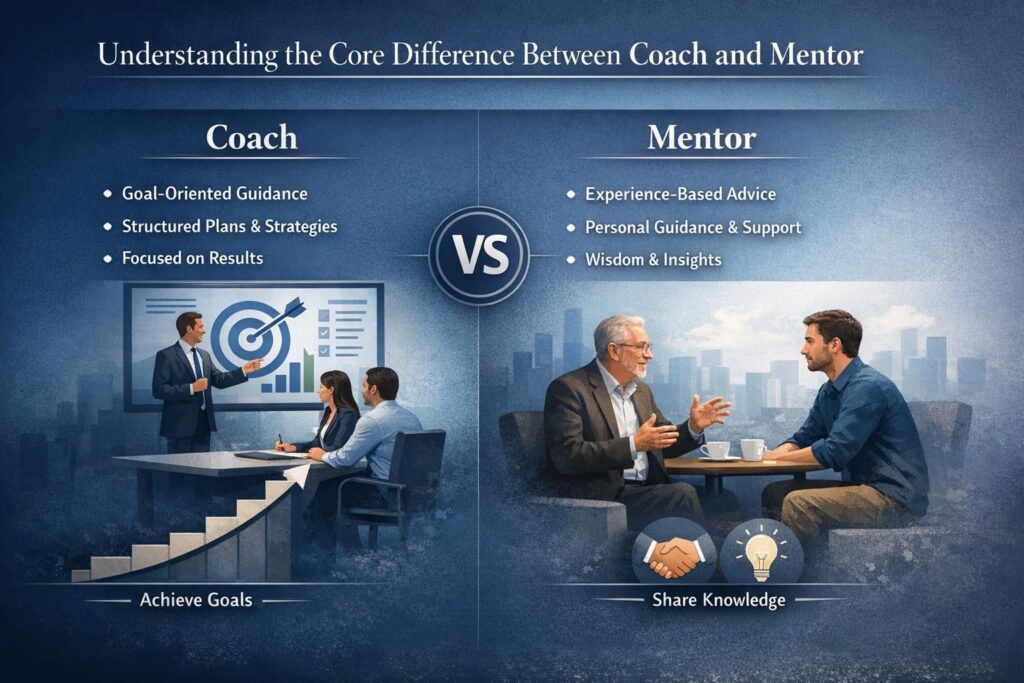
Understanding the Core Difference Between Coach and Mentor
Coaching and mentoring serve different purposes in business. A coach focuses on outcomes, helping individuals and teams achieve specific goals. They provide a structured approach and set clear objectives, guiding clients through the steps needed to reach those goals. Coaches often use proven techniques and frameworks to move businesses forward.
On the other hand, a mentor provides guidance based on their own experiences. Mentors share advice, insights, and lessons learned. Their role is more about supporting personal and professional growth through relationships. While valuable, mentoring may not offer the direct action plans that coaching provides.
For business owners facing slow growth or confusion, understanding this difference is crucial. A coach can help identify barriers and create a clear path to improvement. A mentor can offer wisdom and encouragement but may not address specific issues directly. Recognizing when to seek a coach rather than a mentor can lead to a more focused approach towards business challenges. By understanding these roles, business owners can make informed choices about the support they need.

How Coaches Use Structured Frameworks to Drive Business Growth
Coaches have a special way of helping businesses grow by using structured frameworks. These frameworks are step-by-step systems that can be repeated and refined. They allow coaches to break down complex issues into manageable parts. This approach helps identify what is holding back growth and finding ways to resolve it.
For example, a coach might use a specific model to analyze sales processes. This model helps pinpoint where potential customers are getting lost. Once these areas are identified, actionable steps can be taken to improve the process.
This method contrasts with casual advice. While advice can be helpful, it may not lead to lasting change. Structured frameworks provide a clear path to follow. They help business owners not just to react to problems but to understand the underlying causes. With this understanding, they can create long-term solutions.
By relying on proven systems, coaches help businesses navigate through uncertainty. They create a focused environment for growth. Over time, this structured approach builds confidence. Business owners begin to see results as they apply these frameworks to various challenges. This process leads to a practical and effective way to achieve sustained growth.

Why Mentorship Alone Falls Short for Stalled Business Growth
Relying solely on mentorship can limit a business’s growth. Mentors often share personal experiences and advice, which is helpful but not always what’s needed. When a business faces deep issues, simple advice might not fix the problem.
Mentorship typically focuses on guidance. It provides insights based on what has worked for others. However, this advice may not address specific challenges a business owner faces today. Each business is unique, and what worked in one situation may not apply to another.
Additionally, mentorship lacks a structured approach. It doesn’t always help a business identify underlying issues or create a clear plan for action. Without a solid framework, it’s easy to fall back into old habits, which can keep a business stuck in the same place.
Business growth can be complex. It requires more than just advice; it needs a systematic plan that encourages change. Mentors can offer great wisdom, but when growth stalls, deeper changes are necessary. The focus should shift towards strategies that help overcome setbacks effectively and sustainably. Understanding this can help business owners recognize when they might need a different type of support to truly move their business forward.

The Role of Strategic Coaching in Correcting Sales and Marketing Misalignment
Coaches play a vital role in fixing issues between sales and marketing. Often, these two areas don’t fully connect. When sales and marketing teams work separately, businesses can miss out on opportunities and struggle to grow. A coach helps identify these gaps and aligns both functions toward common goals.
By using structured methods, coaches guide teams to understand each other’s roles better. They encourage open communication, making sure everyone is on the same page. For example, a coach might help the marketing team realize what information sales needs to convert leads. At the same time, they can educate the sales team on the value of marketing campaigns.
This realignment is crucial because it allows teams to work together more effectively. When sales and marketing strategies align, businesses see smoother operations and increased revenue. Coaches foster a culture of collaboration where both sides support each other. This not only improves daily actions but also creates a clearer path for long-term growth.
Overall, strategic coaching focuses on fixing misalignment issues. By helping teams work better together, coaches enable businesses to tap into their full potential. This shift can lead to consistent growth, clearer messaging, and stronger customer relationships.

From Confusion to Clarity: How Coaching Builds Scalable Business Models
Coaching helps business owners cut through confusion and find clear paths to growth. Growth challenges often stem from a lack of structure. When day-to-day decisions feel overwhelming, it becomes hard to see which actions lead to progress. A coach brings clarity by helping owners focus on what truly matters.
Coaches work with business owners to identify key areas needing improvement. They create a plan that breaks down big goals into smaller, manageable steps. This structured approach allows owners to track their progress effectively. Instead of feeling lost amidst endless tasks, they can see the direction they are heading.
For example, a coach might help clarify the target market or streamline operations. These strategic adjustments provide a more solid foundation for growth. When the business model is clear, it becomes easier to scale. Owners can allocate resources wisely, knowing they are supporting initiatives that drive results.
Building a scalable business model requires both courage and commitment. Coaches provide the support to make necessary changes without the confusion. As the business grows, owners can make decisions with confidence, ensuring they are on the right path. When the chaos of running a business is transformed into focused action, owners can truly unlock growth potential.

Choosing the Right Support: Coach vs. Mentor for Long-Term Growth
When a business owner feels stuck, understanding the difference between a coach and a mentor is crucial. A coach focuses on specific outcomes and uses structured systems to help drive growth. They offer a clear path to solve problems and improve performance. Mentors, on the other hand, often share advice based on their experiences. While this can be valuable, it may not directly address the unique challenges a business faces.
Business owners should look at their current situation to determine what type of support they need. If the business has unclear goals, a coach might be more helpful. A coach will provide a framework to set measurable targets and create actionable plans. This ensures everyone is on the same page and working towards the same outcomes.
If the owner needs guidance from someone who has been there, a mentor might be useful. Mentorship can provide perspective and support, but it lacks the structure required to fix specific issues. Reflecting on the kind of help that addresses immediate problems and supports long-term growth is essential for business owners.
In making this choice, consider where the business stands right now. Are there clear goals, or does the path seem foggy? Understanding these elements can clarify whether coaching or mentoring is the right fit for sustainable growth.

Conclusion
In summary, growth can often feel slow and confusing for business owners. This article has highlighted that without a clear direction, businesses may struggle to find their way forward. The main difference between a coach and a mentor plays a key role in this journey. Coaches offer structured support and frameworks, while mentors provide wisdom based on personal experiences.
Understanding when to use each type of support is vital. A coach can help identify specific barriers and create actionable plans, making growth easier to manage. In contrast, mentorship may not address the unique challenges that arise during tough times.
By accepting these differences, business owners can choose the right path that aligns with their immediate needs. Simple systems and clear thinking help reduce chaos, allowing for steady progress. When clarity replaces confusion, it opens up new possibilities.
Ultimately, growth is not just about strategies; it’s about understanding the process. With focused support, business owners can break through obstacles and build a clearer road to success. Embracing the right support will empower them to navigate their growth with confidence.