





Introduction
Many business owners know the feeling of being busy but not moving forward. They might be putting in long hours, yet their growth is slow or unpredictable. Often, they sense something isn’t working, but they can’t pinpoint the issue. This scenario is common for established businesses that plateau. They want to grow, but feel pulled in various directions without clear strategies.
At this stage, simply adding more marketing tactics or sales techniques often backfires. What worked in the early days of a business might not work anymore. Without a solid foundation, different teams may pull apart instead of coming together. This lack of connection leads to confusion, wasted resources, and frustration within the team.
To navigate these challenges, businesses need strategic alignment systems. These systems connect the company’s vision with day-to-day operations and ensure all departments work toward common goals. With clear direction and streamlined systems in place, businesses can unlock steady growth. Recognizing these needs is the first step towards building a more cohesive approach. In the following sections, the focus will be on identifying signs of misalignment and creating strategies to foster collaboration and sustainable success.
Understanding Strategic Alignment Systems in Business Growth
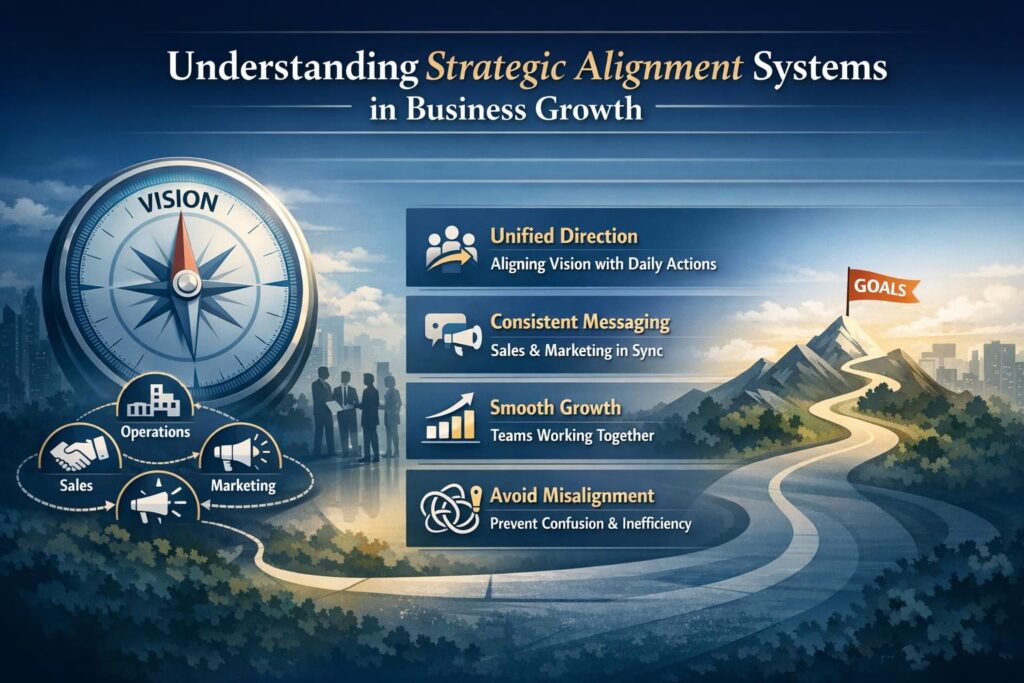
Strategic alignment systems are like a map for businesses. They help connect the company’s vision with day-to-day operations, sales efforts, and marketing messages. When these elements work together, businesses can grow more smoothly and predictably.
Think of strategic alignment as ensuring everyone in the company is on the same page. If the vision is clear, teams can make decisions that fit well with the goals. Sales and marketing need to know what the business stands for. They should share the same messages so customers get a consistent experience. This consistency builds trust and strengthens the brand.
Without strategic alignment, teams can drift apart. Different departments may pull in different directions, leading to confusion and wasted resources. When operations, sales, and marketing don’t work together, the company struggles to grow. Misalignment can slow progress and make reaching goals feel uncertain or overwhelming.
In this section, the focus is on understanding how strategic alignment systems function. By grasping this concept, business owners can better see how their own teams can work together harmoniously to achieve growth. The right alignment creates a strong foundation, setting the stage for sustainable success and smoother scaling.

Hidden Costs of Misalignment in Scaling Efforts
Internal misalignment can damage a business’s ability to grow. It may not be obvious at first, but the costs pile up over time. When teams do not work together, resources are wasted. For example, when sales and marketing do not share the same goals, they may create competing messages. This confuses potential customers and leads to lost opportunities.
Decision-making also slows down in a misaligned environment. Different departments might take longer to agree on changes or strategies. This delay can prevent a business from responding quickly to market demands. When speed matters, a lack of alignment can feel like a heavy anchor holding back progress.
Moreover, misalignment can reduce overall business efficiency. For instance, if teams duplicate efforts or fail to share valuable information, they waste time and money. Employees may also feel frustrated or demotivated when they see conflicting priorities and unclear goals. This can lead to lower morale and higher turnover rates.
Over time, these hidden costs add up. Businesses lose not just money but also their competitive edge. Understanding these issues is the first step in addressing them. By recognizing the signs of misalignment, businesses can begin to pinpoint solutions that remove these obstacles and fuel growth.

Signs Your Business Lacks Strategic Alignment Systems
Many business owners miss the signs that their growth efforts are off track. One common signal is inconsistent messaging. If the marketing team shares one message and sales shares another, customers can become confused. This confusion can lead to missed opportunities and lost sales.
Another indicator is departmental silos. When departments don’t communicate well, important information can get stuck. For example, if the product development team works separate from sales, they may not fully understand customer needs. This gap can lead to products that don’t meet market demand.
Additionally, if teams often face conflicts over priorities, it can signal misalignment. When everyone is focused on their own goals but not the overall vision, success becomes harder to achieve. The result is wasted time and resources, as efforts don’t connect or support each other.
Finally, look at the decision-making process. When decisions take too long or involve too many people, it can be a sign of misalignment. Quick and clear decisions require a unified direction and understanding among teams.
Recognizing these signs is crucial. By being aware of these patterns, business owners can start to address issues before they grow into larger problems. Identifying these gaps can set the stage for better collaboration and a stronger path to sustainable growth.

How Misaligned Sales and Marketing Derail Scale Potential
Misalignment between sales and marketing can harm business growth. When these teams do not work together, they send mixed messages to customers and create confusion. For example, if marketing promotes a special offer that sales cannot deliver, customer trust diminishes. This can lead to lost sales and a damaged reputation.
Additionally, teams may repeat efforts without realizing it, wasting time and resources. When marketing creates leads but sales cannot follow up effectively, potential customers slip away. This disconnect makes it harder to achieve consistent growth and increases frustration among team members.
Another issue is that sales and marketing may focus on different goals. Marketing might aim for high website traffic, while sales push for closing deals. When team goals do not align, the whole organization feels the impact. This can result in mixed priorities, where neither team supports the other adequately.
Businesses must recognize these misalignments to improve outcomes. Clear communication and shared objectives are essential for bridging the gap between sales and marketing. By aligning their efforts, businesses can create a unified front, leading to improved customer experiences and better overall performance.

Building Strategic Alignment Systems That Support Sustainable Scaling
Everyday decisions shape how well a business scales. When teams work in sync, they create a strong foundation for growth. Strategic alignment systems help connect various parts of a business, like vision, operations, sales, and marketing.
A clear structure helps everyone understand their roles and responsibilities. This prevents confusion and boosts productivity. For instance, when marketing knows what sales needs, they can create better campaigns. This unity makes it easier to meet goals and satisfy customers.
Building these systems involves setting common goals and fostering open communication. Leaders should encourage regular check-ins to ensure everyone is on the same page. By sharing information, teams can quickly adapt to changes in the market.
Another important aspect is measuring progress. Tracking key results keeps the focus on goals and highlights areas that need improvement. When businesses regularly review their alignment systems, they can identify what works and what doesn’t.
Finally, flexibility is essential. Businesses should be willing to adjust their alignment systems as they grow. What worked yesterday might not work tomorrow. By staying adaptable, a business can continue to scale effectively and sustainably. Making these everyday adjustments leads to long-term success.

Moving from Reactive Decisions to Strategic Clarity and Structure
Many businesses operate in a reactive mode. This often leads to quick fixes rather than long-term solutions. When business owners feel stuck, they may make decisions based on immediate needs instead of a well-thought-out plan. This approach can create confusion and inconsistency.
By adopting a structured strategy, businesses can shift from reacting to events to planning for them. Strategic alignment means everyone is on the same page, from the vision down to daily operations. A clear structure helps team members understand their roles and how they contribute to overall goals.
Once decisions are made with a clear direction, businesses can focus on what truly matters. This change helps to streamline processes and improve communication. When sales and marketing efforts are aligned, it boosts effectiveness and enhances customer experiences.
Getting rid of reactive habits opens the door for growth. Businesses can start to see patterns in their operations, making it easier to identify what is working and what isn’t. Systemized strategic alignment allows for consistent decision-making, leading to smoother growth and more sustainable success.

Conclusion
In conclusion, businesses often find growth challenging when there is no clear direction. As explored, misalignment can lead to wasted resources and frustration among teams. When operations, sales, and marketing do not work together, it creates confusion and slows down progress.
Implementing strategic alignment systems is essential for turning this situation around. By connecting the company’s vision with everyday tasks, businesses can encourage teamwork and clarity. A unified approach helps ensure all departments are pulling in the same direction, making it easier to identify and reach goals.
Simple systems and straightforward thinking allow businesses to navigate complexities smoothly. It becomes possible to streamline communication, reduce confusion, and enhance decision-making. This makes growth feel more manageable rather than overwhelming.
Ultimately, understanding the importance of strategic alignment systems gives businesses a solid foundation for future success. When all parts of the organization are aligned, they can work collaboratively toward growth. This not only makes business operations more efficient but also creates a clearer path for sustainable development. With these insights, business owners can build a more cohesive strategy that fosters both productivity and growth.