





Introduction
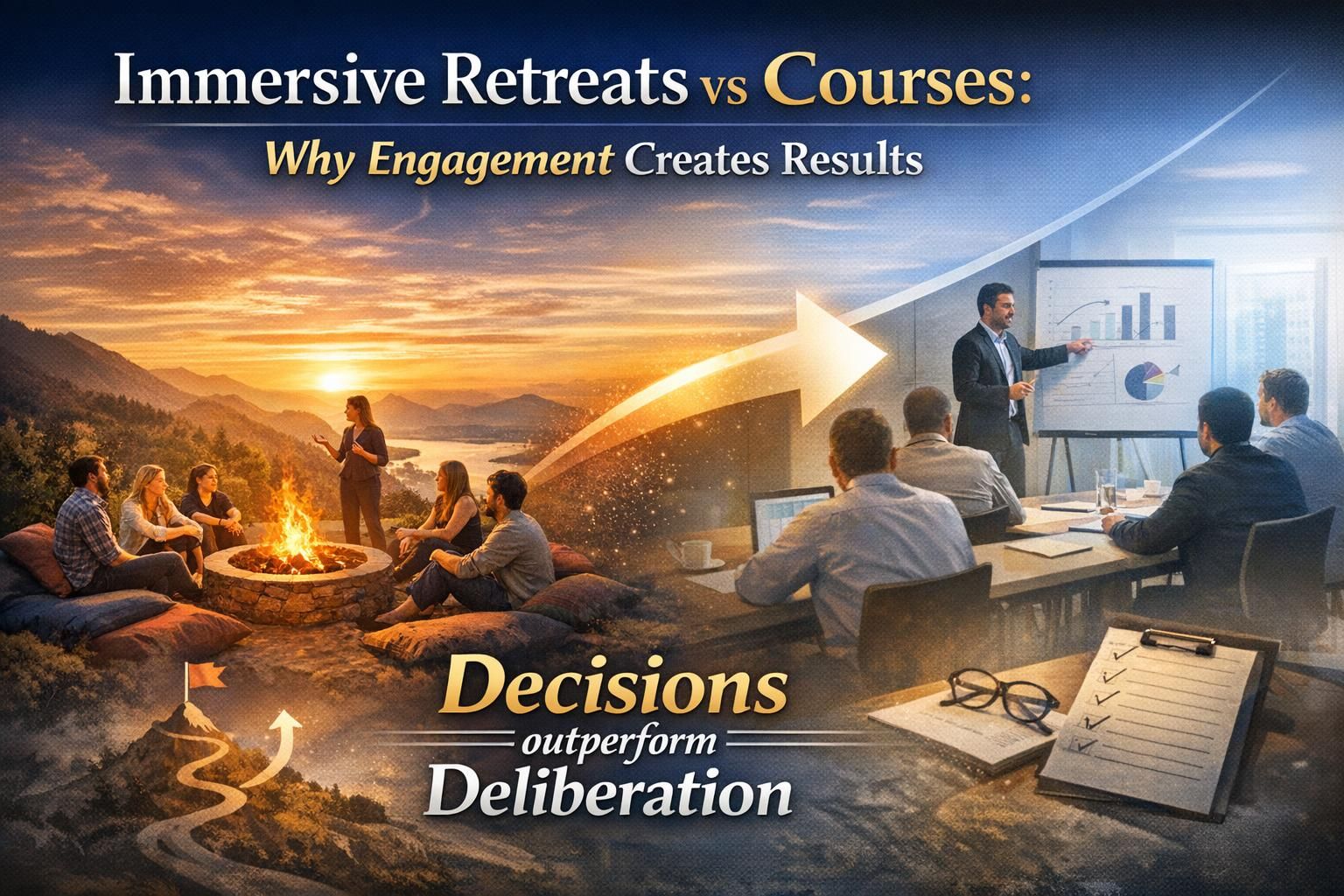
Many business owners find themselves working hard but not seeing the results they want. They may feel busy, yet their growth has stalled or become unpredictable. This situation often leaves them wondering why efforts aren’t paying off. The truth is, as businesses grow, “more tactics” can lead to confusion instead of clarity. Owners may try numerous strategies without focusing on what truly matters.
Clear direction and simple systems are essential for overcoming these challenges. Businesses thrive when owners can streamline their efforts and make informed decisions. Immersive retreats and engaging environments provide opportunities to remove distractions and dive deep into critical issues. In these settings, business leaders can collaborate, brainstorm, and explore new ideas together.
This article examines the differences between immersive retreats and traditional courses, highlighting why this distinction matters. By understanding the strengths of each approach, owners can choose the right path for their business growth. Immersive retreats offer a chance to engage fully, which is often the key to breaking through growth barriers. With the right environment and focus, owners can gain the clarity they need to move forward confidently.
Understanding Immersive Retreats vs Courses in Business Growth
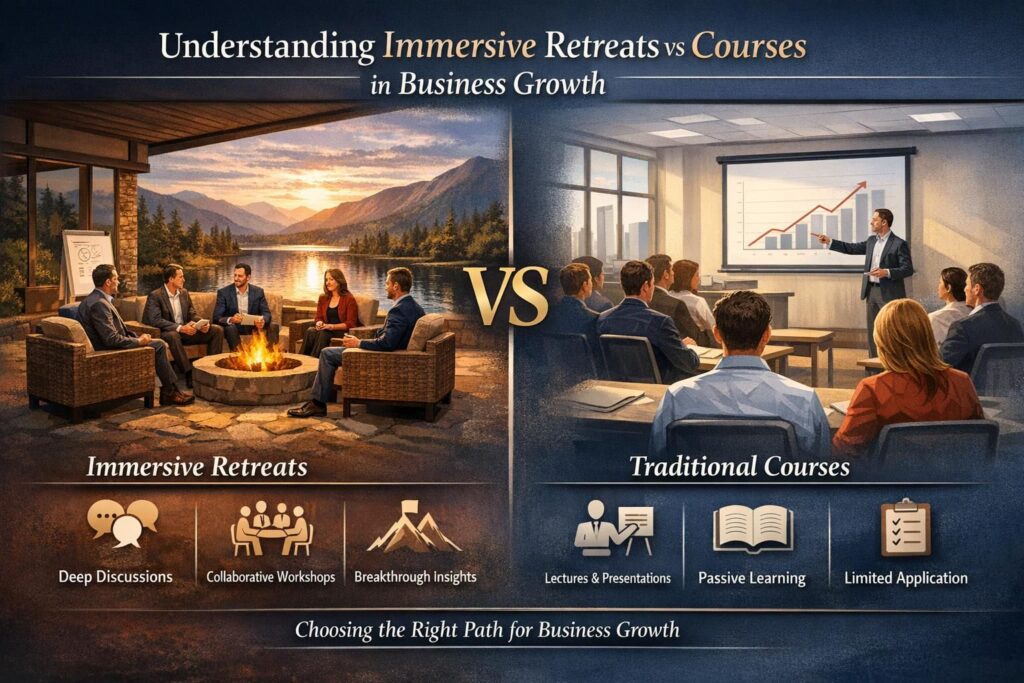
In the world of business growth, two popular options are immersive retreats and traditional courses. Both have their place, but they work in different ways. Immersive retreats are designed to fully engage participants in a focused environment. This setup helps business owners dive deep into complex issues. They often lead to real breakthroughs because participants can discuss, explore, and brainstorm together.
On the other hand, traditional courses tend to be more about listening and learning. While they offer valuable information, they can lack the engagement that drives real change. Business owners might leave a course with new ideas, but many struggle to apply them effectively in their day-to-day operations.
The format of learning matters significantly when trying to drive results in business growth. Immersive retreats create a space for collaboration and immediate feedback. This interaction can spark new insights that courses may overlook. Understanding these differences is essential for any business owner looking to break through growth barriers. By choosing the right format, owners can set the stage for lasting change and development.
The Role of Full Engagement in Breaking Through Growth Plateaus
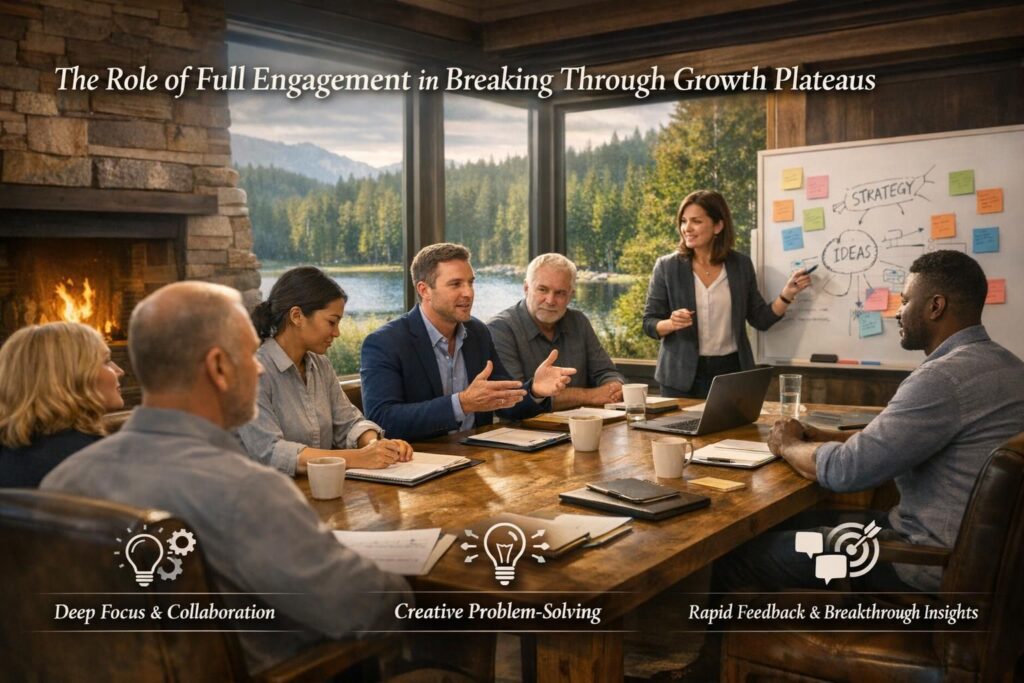
Full engagement plays a crucial role in overcoming growth plateaus. In a business setting, this means being completely focused and involved in problem-solving. Immersive environments, like retreats, create space for deep thought and collaboration. Here, business owners can escape daily distractions and get the clarity needed to see their challenges clearly.
When fully engaged, individuals often make faster and more effective decisions. They share ideas openly, leading to creative solutions. This type of interaction allows participants to learn from each other’s experiences, which is often missing in traditional courses. Courses tend to have a set structure, limiting opportunities for real-time discussions and adjustments.
In an immersive setting, feedback happens naturally. As ideas are tested and explored together, everyone can pivot quickly if something isn’t working. This dynamic helps address complex problems that slow down growth, something standard courses may not handle well.
The environment itself matters too. Being away from the usual office setting fosters a mindset shift. It encourages thinking outside the box and strengthens team bonds. When business owners experience this level of focus, they often discover the insights needed to push forward. Having the right atmosphere makes a big difference in finding the breakthroughs essential for growth.
Why Passive Learning Falls Short When Scaling Requires Action
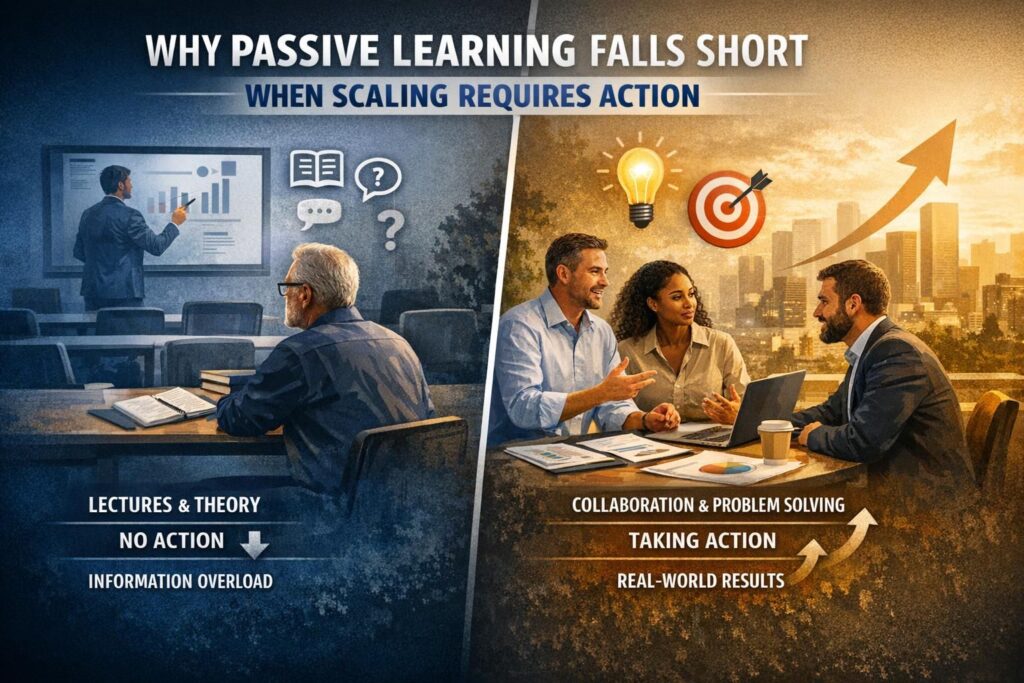
Passive learning, like traditional courses, often fails to address the real challenges in growing a business. When owners rely solely on lectures and readings, they miss out on opportunities for immediate application and feedback. Growth often needs action, not just information.
Courses can provide valuable knowledge, but they lack the interaction and real-time problem-solving needed in tough situations. For example, when a business faces a sudden market change, quick decisions matter. Passive learning doesn’t allow for brainstorming or collaboration.
In contrast, active learning environments enable owners to openly discuss issues and explore solutions with peers and experts. This collaborative approach leads to better understanding and faster results. Business owners can share struggles, learn from each other, and refine their ideas in real time.
Moreover, passive learning may lead to information overload. Owners could feel overwhelmed by theories and strategies that aren’t tailored to their specific needs. Without applying those concepts, businesses can become stagnant, stuck in the same patterns. Active environments foster a sense of urgency and ownership, making it easier for owners to implement new strategies and drive growth.
In short, focusing on action and engagement rather than passive learning can help owners break through barriers and create sustainable growth.
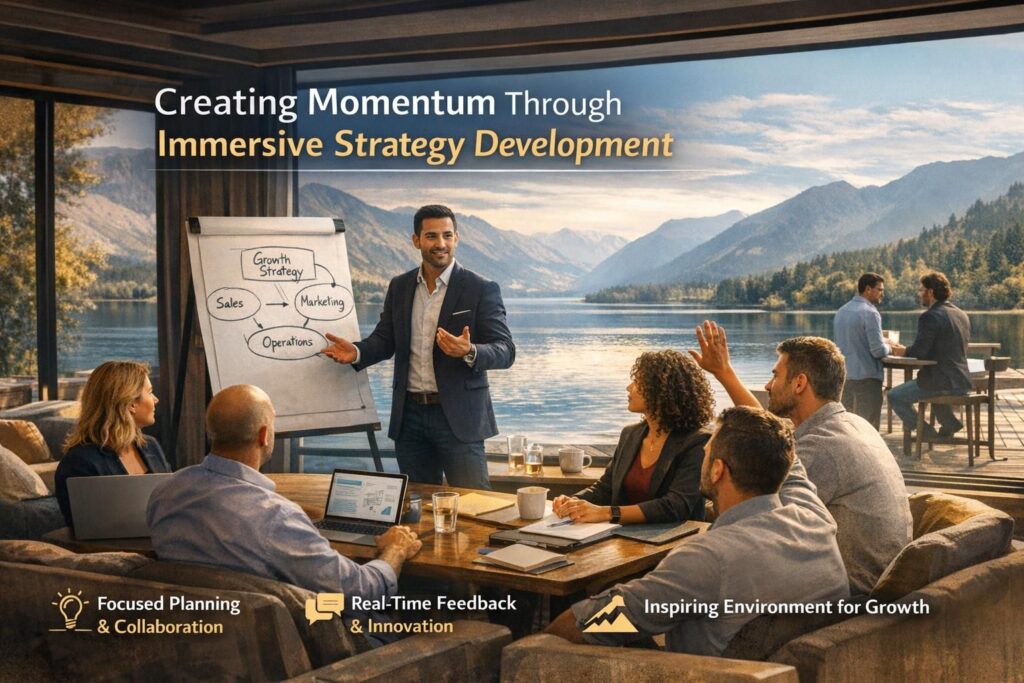
Creating Momentum Through Immersive Strategy Development
In business, creating momentum is crucial for growth. Immersive retreats provide a unique setting that encourages deeper strategy development. During these retreats, businesses can explore ideas in detail. This focused time allows for better planning and team alignment. Participants can discuss sales, marketing, and operations in one space, creating a cohesive strategy that everyone can embrace.
Unlike traditional courses, immersive retreats enable real-time feedback. This means that as ideas are shared, they can be adjusted and improved on the spot. Teams can collaborate more effectively, building on one another’s strengths. The energy of the group often sparks new connections and innovative solutions that may not surface in a typical classroom setting.
Additionally, the flexible structure of retreats supports creative thinking. Participants are removed from their daily routines, which can limit mindset. This fresh environment encourages them to think outside the box. As a result, the strategies developed are not just plans on paper but actionable steps that can drive real change.
By focusing on immersion, teams can build a strong foundation for scaling. This approach creates a momentum that traditional courses simply can’t match, leading to clearer goals and a unified vision for growth.
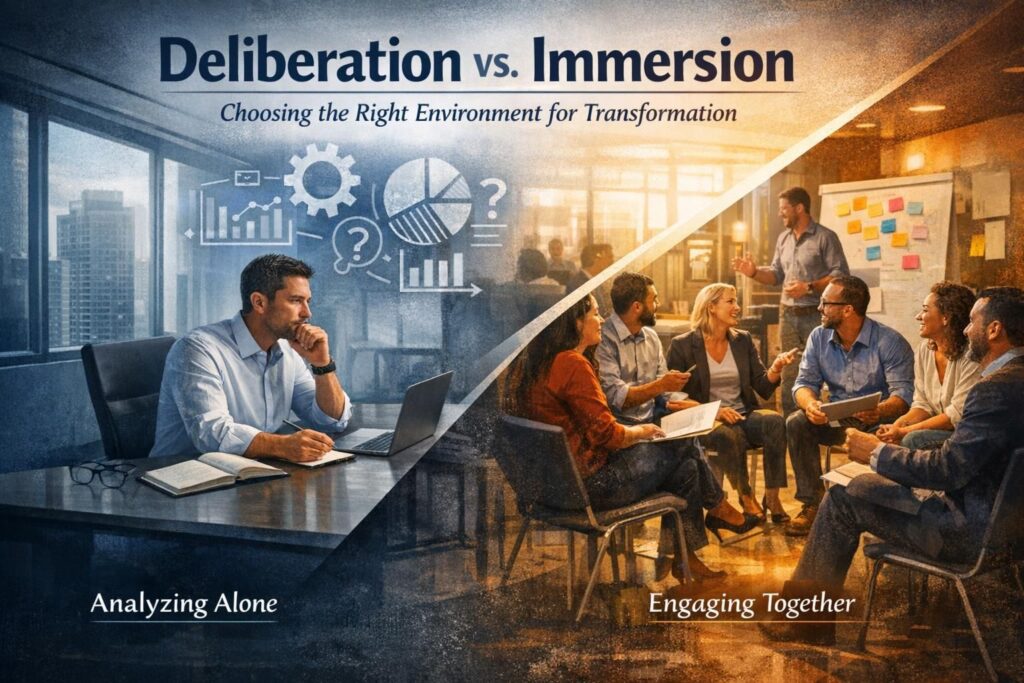
Deliberation vs. Immersion: Choosing the Right Environment for Transformation
Every business owner faces moments when growth feels stuck. Understanding the difference between simply thinking about changes and truly experiencing them can guide decisions. Deliberation often involves sitting quietly and analyzing problems. While this thinking is important, it can limit creativity and urgency.
On the other hand, immersion involves diving deep into a situation. It means engaging with challenges in real-time, often in a dynamic environment. This can spark new ideas and breakthroughs. Immersive experiences allow owners to connect with others facing similar issues. Conversations during these moments can lead to fresh insights and solutions.
For many, spending time in an immersive setting can shake off stale thinking. It creates a space to test ideas and strategies in a way that traditional reflection cannot. Engaging fully in an immersive experience often drives clarity and faster decision-making.
Recognizing the environment that will support a business’s next steps is crucial. If growth feels blocked, choosing immersion over mere deliberation can be a game changer. This shift in approach can break down walls and open pathways to new possibilities, helping business owners move forward with confidence. Selecting the right environment for transformation can lead to lasting change and improved results.
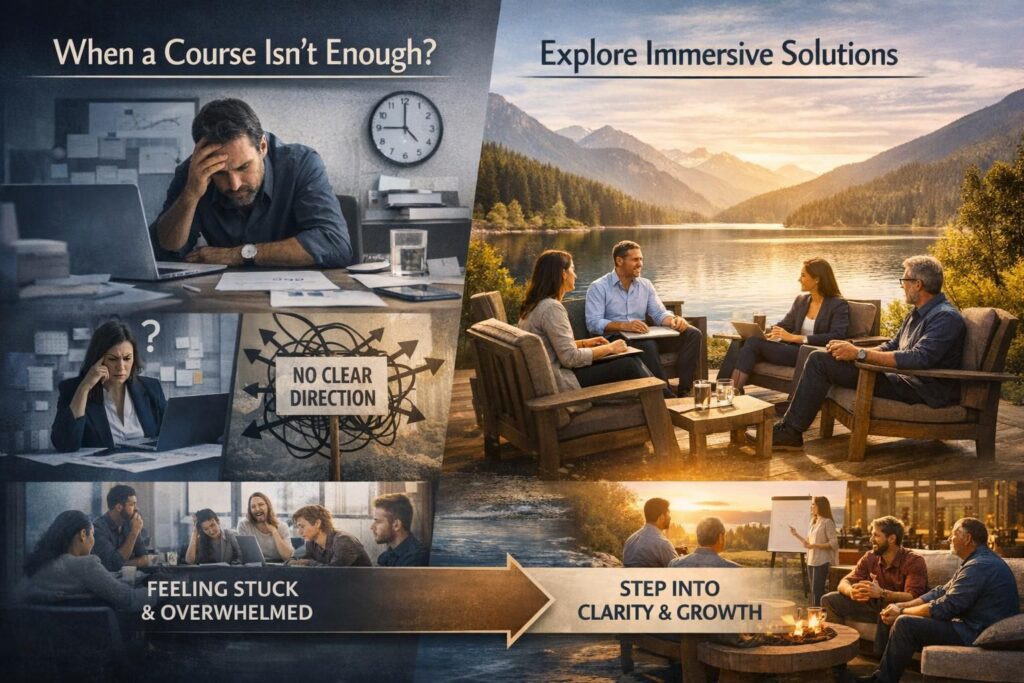
Identifying When a Course Isn’t Enough for Your Business Evolution
Courses can be helpful, but they may not solve deeper problems. Business owners should look for signs that their growth issues require more than just lessons. If strategies from a course have been tried but did not produce results, it might be time to rethink the approach.
Feeling stuck or confused about the next steps is a red flag. If decisions seem harder than they used to be or if there’s a lack of clear direction, those are signs that a course alone won’t help. Business owners may also notice that team engagement is low or that their goals are unclear. When daily operations feel chaotic and overwhelming, it’s often a signal that the usual methods are not enough.
Immersive retreats can provide a reset. Unlike courses focused on theory, these retreats encourage hands-on experience. They allow business owners to step away from routine pressures and gain fresh perspectives. A retreat creates an environment where teams can communicate freely and explore innovative ideas. This setting can lead to better decisions and a renewed sense of purpose.
In essence, recognizing that a course may not meet the unique needs of a business is the first step. It opens the door to exploring immersive options that can drive real change and clarity.
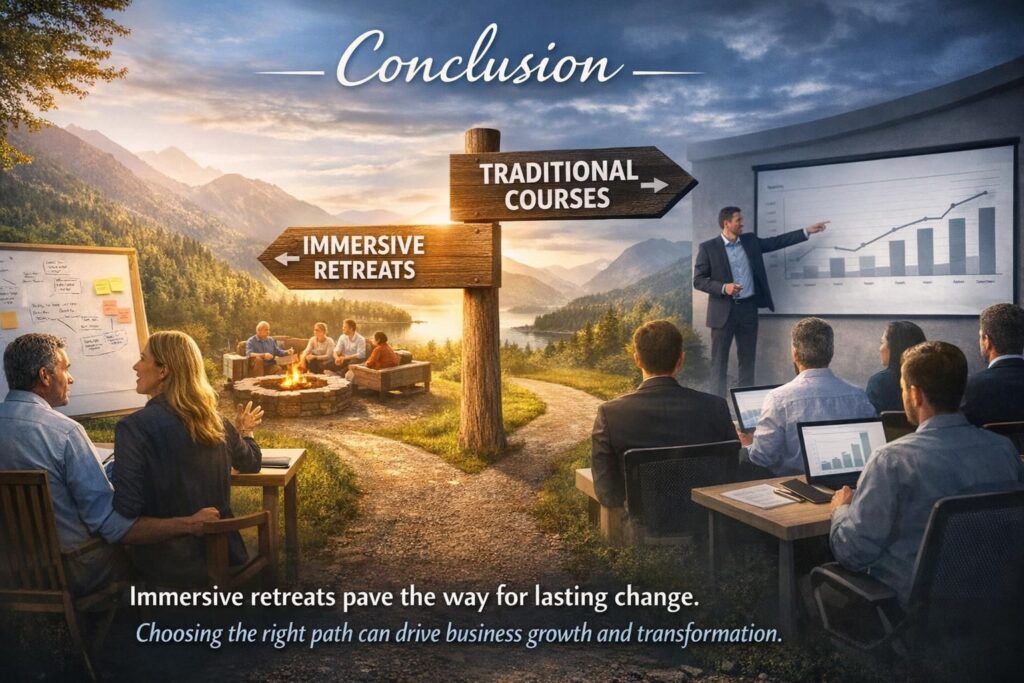
Conclusion
Business growth can sometimes feel frustrating and hard to manage. Throughout this article, it has been emphasized that a lack of clear direction is often a big reason why growth slows down. When business owners can’t see their next steps, it becomes challenging to keep moving forward.
Understanding the difference between immersive retreats and traditional courses is critical. Immersive retreats engage participants fully, allowing them to collaborate and brainstorm in real-time. This immersive experience can break through growth barriers, as it encourages sharing ideas and adapting strategies on the spot. In contrast, traditional courses may provide valuable information, but they often lack the engagement necessary for meaningful changes.
By creating simple systems and environments that enhance focus, business leaders can manage growth more effectively. Immersive settings foster clarity and collaboration, which are essential for navigating challenges. With the right environment, owners can discover new insights and develop actionable strategies.
In summary, recognizing when a course isn’t enough is essential for business evolution. Engaging in immersive retreats can pave the way for lasting change. By concentrating on the right methods and approaches, business owners can gain the momentum they need to drive growth and transform their organizations.