






Introduction
When a business feels stuck, it can be frustrating. Owners might notice they are busy every day, but growth seems to slow or even stop. This situation can leave them wondering what went wrong or why success feels unpredictable. Many business owners find themselves pulled in different directions, trying various tactics without seeing results.
In these moments, understanding the power of storytelling can be a game-changer. As businesses move past their early stage, simply trying “more tactics” often falls short. Without clear direction, these efforts can feel scattered, making it tough to reach goals. Simple systems and a focused strategy are essential for steady growth.
Storytelling persuasion psychology taps into human experiences. It allows business owners to connect emotionally with customers, making messages more impactful. Learning how to craft and share stories can help clear confusion and provide clarity. This approach not only engages audiences but also builds lasting relationships.
In this article, we will explore the importance of storytelling in business growth. We’ll look at how clear messaging, emotional connections, and structured narratives can help overcome barriers. By implementing these concepts, business owners can create a roadmap toward renewed growth and success.

Understanding Storytelling Persuasion Psychology
Storytelling taps into basic human psychology. People are naturally drawn to stories. When they hear a story, they can relate to it on an emotional level. This connection makes them more open to new ideas and choices. In business, this means that telling a good story can help owners influence customers’ decisions effectively.
Stories help to lower resistance. When customers feel an emotional bond, they are less likely to push back against a product or service. Instead, they become engaged and curious, wanting to know more. This emotional engagement creates a smoother path to making a sale.
Understanding how storytelling works is essential for business growth. It can turn dull facts into exciting narratives. When business owners learn to craft their stories, they become more relatable and memorable. Instead of just presenting numbers, they create experiences that stick in people’s minds.
In a world full of noise and options, stories cut through confusion. They provide clarity and meaning. By weaving narratives into their marketing, business owners can guide customers through their brand journey much more effectively. This approach can be the key to unlocking new growth opportunities.

Why Logic Fails and Narrative Connects
Many business owners rely on facts and figures to sell their products or services. While logical arguments are important, they often don’t persuade people the way a good story does. Customers want to feel something when they decide to buy. A strong story can tap into their emotions, making them more likely to connect with a brand.
When a salesperson lists features and benefits, potential customers might not feel excited or engaged. They may even tune out. But when a story is told, it creates a picture in the customer’s mind. They can see how a product or service can improve their life. This emotional experience drives deeper engagement, which boosts sales.
A well-crafted narrative allows customers to relate to the brand. It gives them a reason to care. They start to see themselves in the story. This emotional connection is crucial for building trust and loyalty. In contrast, purely logical arguments can leave customers feeling indifferent.
Understanding the power of storytelling can transform how businesses communicate. Instead of bombarding potential customers with data, it’s essential to share relatable stories. This approach can lead to better connections and, ultimately, more sales. The emotional response a story creates can make all the difference in achieving business growth.
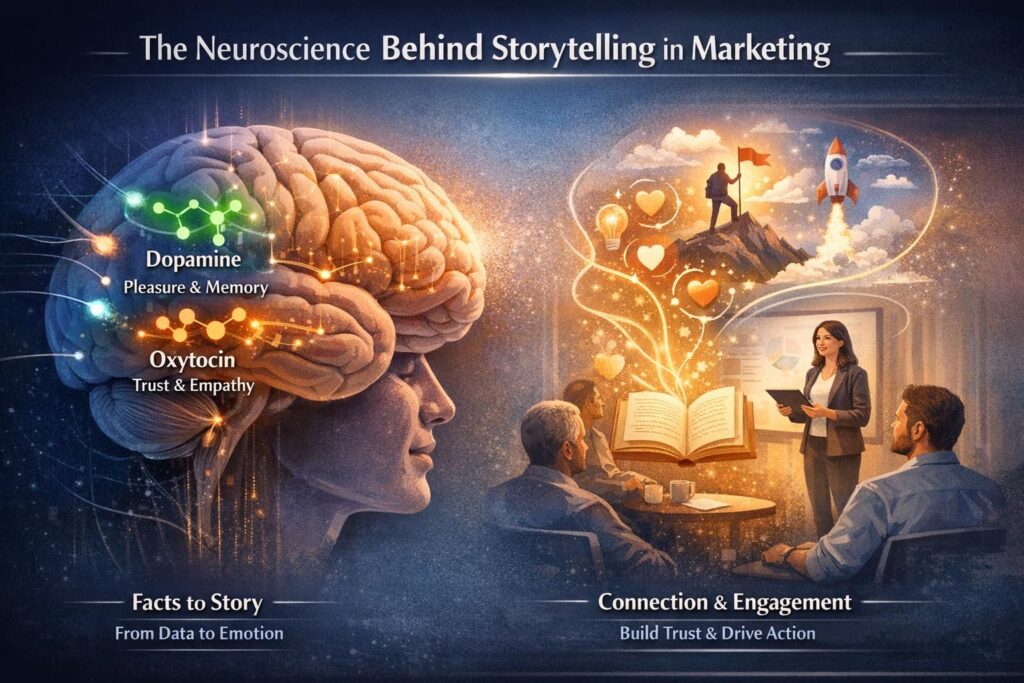
The Neuroscience Behind Storytelling in Marketing
The way the brain reacts to stories can significantly impact business growth. When people hear a story, their brains release chemicals like dopamine and oxytocin. Dopamine makes them feel pleasure and helps them remember the information. Oxytocin builds trust and empathy. This is important because when potential customers feel connected to a story, they are more likely to buy.
Stories also help the brain make sense of complex information. They turn dry facts into relatable experiences. This connection makes it easier for customers to understand what a business offers and why it matters. Without a strong narrative, messages can feel confusing or unappealing.
Many business owners overlook this connection. They focus too much on numbers and logic, missing the emotional pull that stories can create. A powerful story can break down barriers, making customers more open to ideas. By tapping into the brain’s natural responses, stories can strengthen relationships and improve retention.
Recognizing this science can help business owners craft better messages. Using storytelling in marketing not only creates engagement but also drives growth. When businesses embrace this approach, they can move past stagnation and connect with their audience more effectively.

Identifying Growth Barriers Through Messaging
Clear messaging is key for business growth. When a company’s message is unclear or doesn’t match its goals, it can create confusion. This confusion makes it hard for customers to understand what the business offers. If customers cannot see the value, they are less likely to engage or make a purchase.
Many businesses struggle with telling their story effectively. This could mean mixing up their main points or using language that doesn’t connect with their audience. If the message isn’t aligned with what customers want or need, this creates a barrier to growth.
Also, inconsistent messaging across different platforms can confuse potential customers. If someone sees a social media post that differs from the website message, they may end up unsure about the brand. This lack of clarity harms trust and interest.
By identifying these messaging barriers, businesses can start making changes. Regularly reviewing communications and seeking feedback can help. It’s important to ensure that the company’s narrative is clear and consistent. When messages align with the brand’s purpose and the needs of customers, the path to growth can become much clearer.

Using Story Structures to Align Sales and Marketing
Story structures help businesses communicate clearly. When sales and marketing use a common story format, it builds stronger connections with customers. This shared approach creates a consistent message, making it easier for customers to understand what the business offers.
When every team member tells a similar story, it reduces confusion. Customers hear the same key points, whether they see an advertisement or talk to a salesperson. This unity builds trust and makes it easier for them to decide to buy.
Story structures also help identify who the audience is. Businesses can focus their messages on what matters most to their customers. This way, the communication feels personal. A customer looking for a solution will relate more to a message tailored to their needs.
Additionally, using established story frameworks can simplify training for new team members. Once everyone understands the main points of the story, they can communicate more effectively. This leads to stronger marketing campaigns and sales strategies.
Overall, aligning sales and marketing through clear storytelling promotes smoother customer journeys. When every stage of a customer’s experience is connected by a story, it keeps them engaged and helps the business grow.

Building Scalable Systems with Story-Driven Strategy
Story-driven strategies help create systems that grow businesses sustainably. When a business uses storytelling, it can turn its message into a clear framework that everyone understands. This clarity helps guide decisions and actions across the company.
Decisions made without a guiding narrative can lead to confusion. When team members are unsure about the company story, they may make choices that don’t align with the overall vision. This can cause inefficiencies and stagnation in growth.
Effective storytelling shapes how a business operates. It provides a consistent theme for marketing and sales efforts. For instance, businesses that share their story effectively attract loyal customers who connect emotionally. These customers are more likely to support the brand and refer it to others.
Creating repeatable systems based on strong narratives sets a foundation for growth. Teams can clearly see how their contributions matter to the overall story. This alignment fosters teamwork and encourages everyone to work toward common goals.
When a business prioritizes a story-driven approach, it builds a framework that supports long-term success. It can adapt to changes while staying true to its core message, keeping growth consistent and sustainable over time.

Conclusion
In summary, businesses often face slow growth when they lack a clear direction. The insights shared highlight the importance of storytelling persuasion psychology in overcoming this challenge. By crafting and sharing compelling narratives, business owners can engage customers on an emotional level. This emotional connection is crucial for effective communication and deeper engagement, which ultimately drives sales.
Additionally, understanding how stories resonate with human psychology offers clarity and helps convey complex ideas simply. Clear messaging that aligns with customers’ needs reduces confusion and builds trust. Implementing structured story formats allows sales and marketing teams to present a unified message, enhancing customer journeys and experiences.
Moreover, adopting a story-driven strategy creates scalable systems. When employees understand the company’s narrative, they can make better choices that align with growth goals. This consistency fosters a positive environment where everyone works toward a common purpose.
Overall, embracing storytelling not only clarifies communication but also creates meaningful connections. By focusing on simple systems and clear thinking, businesses can navigate their paths more effectively. As they harness the power of storytelling, owners can overcome obstacles and rekindle their growth journey with renewed confidence.