





Introduction
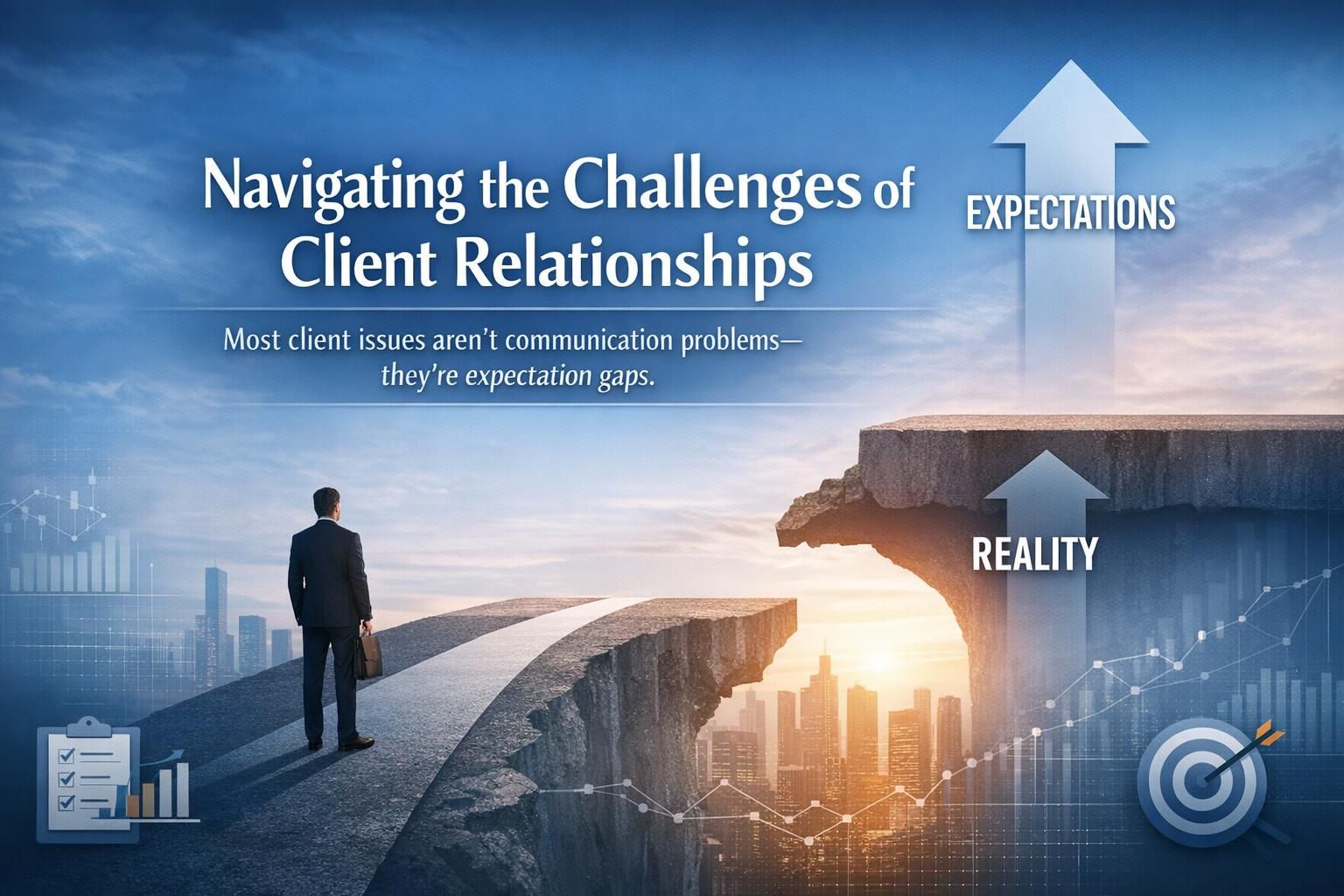
Many business owners hit a wall when it comes to growth. They are busy, yet they often feel like they are not moving forward. This stagnation can be frustrating, especially when they can’t pinpoint the issue. It’s common for established businesses to struggle with unpredictable growth, leading to confusion and anxiety.
One reason for this slowdown is the reliance on more tactics without a clear plan. At some point, simply adding strategies stops working. As a business matures, it requires more than just enthusiasm; it needs direction and simple systems that foster steady growth. Without these, business owners can feel pulled in many directions, making it hard to focus on what truly matters.
Understanding client relationship management is essential in overcoming these challenges. By managing expectations and ensuring strong client connections, businesses can create a solid foundation for growth. The following sections will explore the signs of stalled growth, highlight the importance of clear direction, and demonstrate how simple systems can help businesses thrive. By addressing these key areas, owners can break through barriers and unlock their company’s full potential.
Understanding the Core of Client Relationship Management
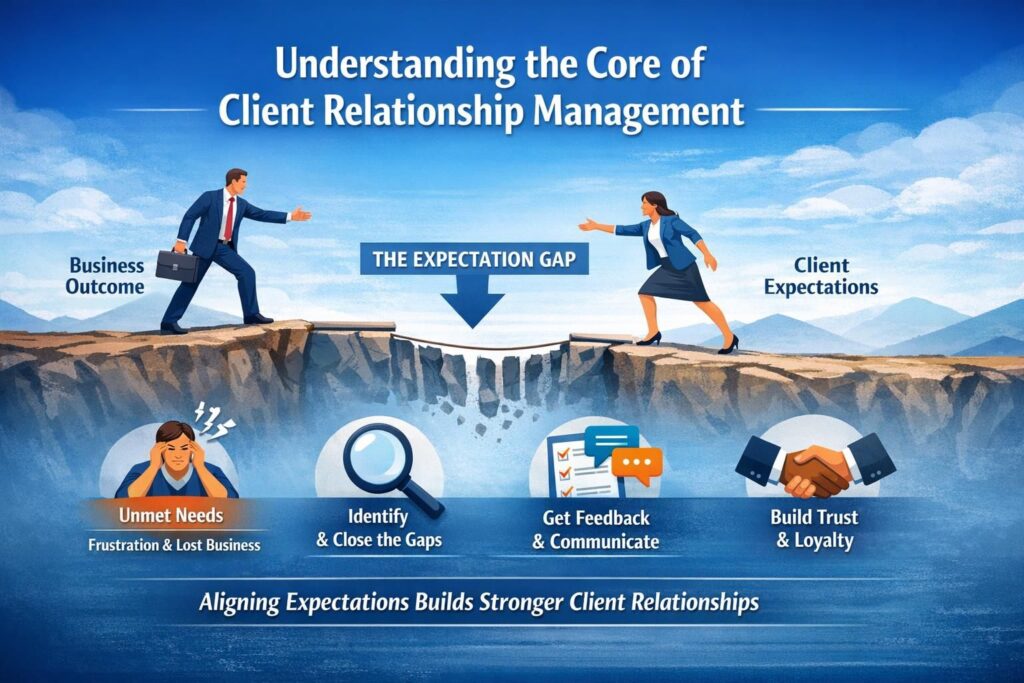
Client relationship management is more than just talking with clients. It is about understanding their needs and expectations. Many business owners find that growth stalls because they struggle to meet clients’ demands. This happens when there is a gap between what clients expect and what the business delivers.
When expectations are not managed well, frustration can grow. Clients may feel ignored or undervalued, which can lead to lost business. It’s crucial for business owners to dig deeper and understand these gaps. Often, they can fix issues before they become bigger problems.
Effective client relationship management also means being proactive. Business owners should seek feedback and open lines of communication. This approach helps to identify potential issues early on. It also shows clients that their opinions matter, helping to build trust.
By focusing on expectations, business owners can create a more stable foundation for growth. This involves not just delivering a service but ensuring that the service lines up with what clients really want. Businesses that get this right are more likely to strengthen their relationships and thrive in the long run. Simple steps to clarify and align expectations can make a big difference.
Identifying the Hidden Causes of Relationship Failures
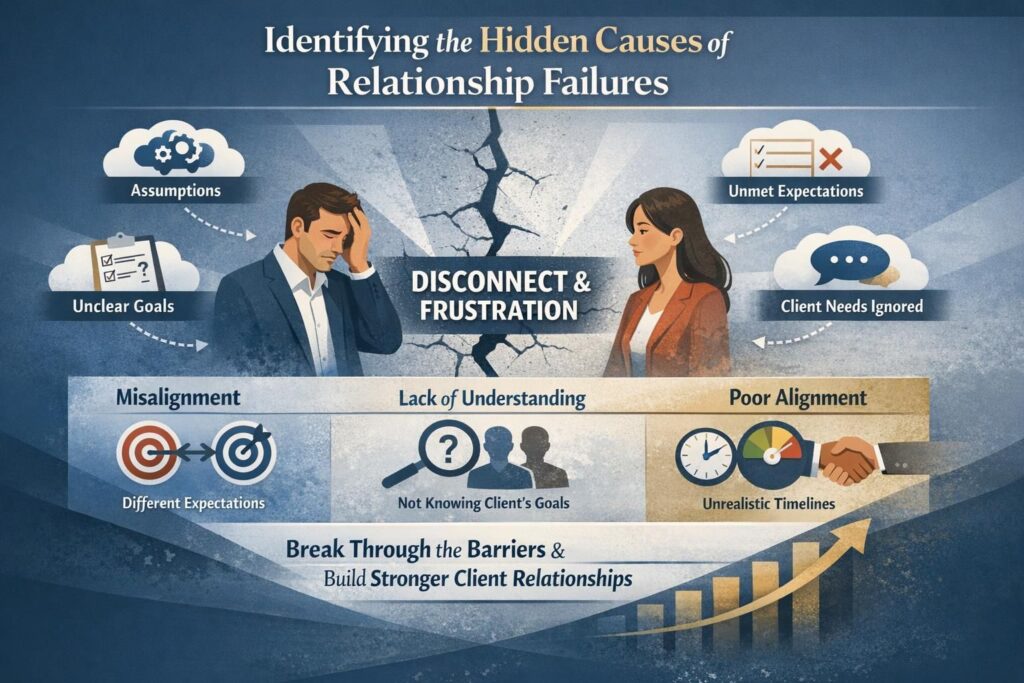
Many business owners struggle with their client relationships, yet they may not grasp the hidden causes behind these issues. Often, problems are more than just poor communication. They can stem from unmet expectations, unclear goals, or a lack of understanding of client needs. When businesses overlook these underlying issues, they create barriers that limit growth.
For example, if a client feels their needs are not understood, they may disengage. This disengagement often comes from assumptions rather than actual misunderstandings. A business owner may think their product or service is aligned with the client’s goals, but reality shows a different picture.
Another common issue is not setting clear expectations at the start of a relationship. When neither side agrees on what success looks like, frustration can grow. Clients might expect quick results, while the business needs more time to deliver. This misalignment leads to dissatisfaction on both sides and a stalled relationship.
Addressing these hidden causes can lead to stronger connections. By identifying the real issues behind relationship failures, business owners can shift their focus. Instead of just fixing communication, they can work on understanding and aligning expectations. This approach can create a more positive environment for both the business and its clients.
The Role of Expectation Management in Client Relationship Management
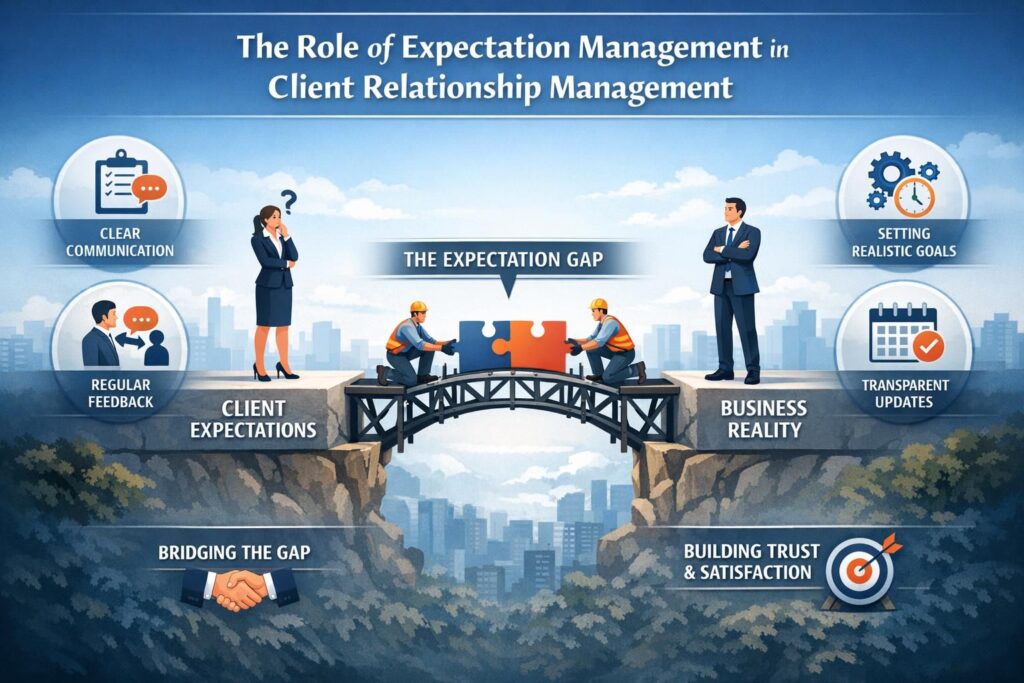
Misaligned expectations often cause problems in client relationships. When clients have one idea of what they will receive, but the business has another, dissatisfaction can grow quickly. This gap leads to disappointment and can even cause clients to leave.
To improve relationships, it’s important to clarify what clients expect and what the business can realistically deliver. Regularly checking in and asking for feedback helps ensure everyone is on the same page. This way, misunderstandings can be caught early, preventing bigger issues down the line.
Businesses should also educate clients about their processes, services, and timelines. When clients understand how things work, they are less likely to have unrealistic expectations. This proactive approach avoids disappointment and builds trust.
Additionally, setting realistic deadlines and providing regular updates can help assure clients that their needs are being met. If a delay occurs, communicating it clearly and promptly can go a long way in maintaining trust.
In summary, managing expectations is not just about communication. It focuses on understanding what clients want and ensuring the business can meet those needs. By doing this, businesses can create stronger relationships, leading to better satisfaction and growth.
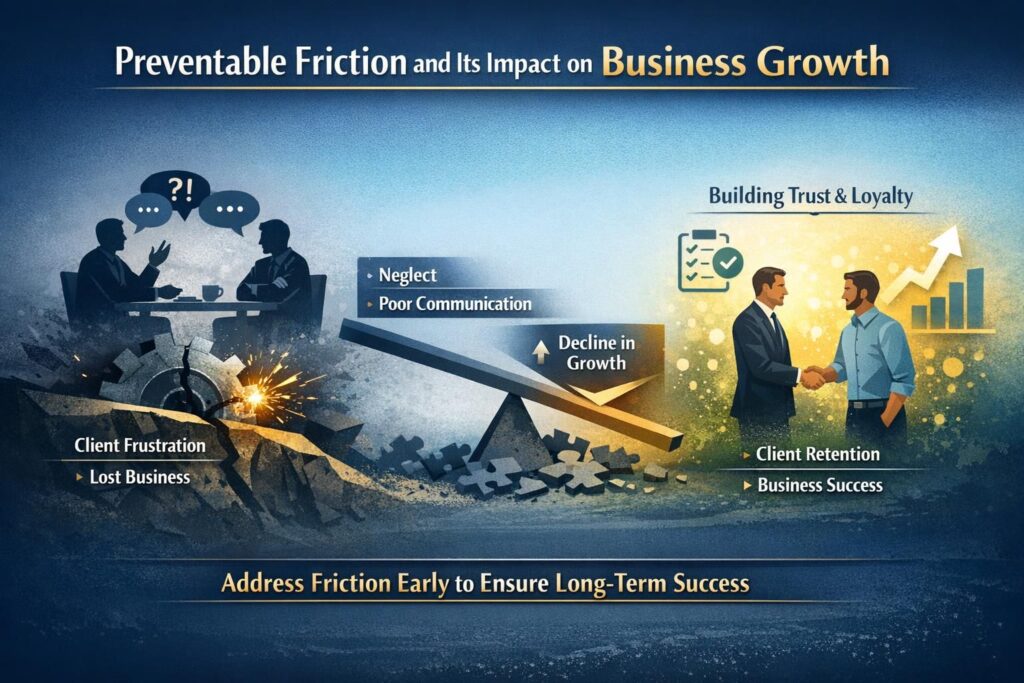
Preventable Friction and Its Impact on Business Growth
Unresolved tension in client interactions can slow down business growth. When clients feel frustrated or ignored, they may choose to take their business elsewhere. This often happens when issues that seem small aren’t addressed. A lack of clear communication or understanding can create friction that snowballs over time.
Day-to-day decisions significantly affect how clients perceive a business. Each interaction, no matter how minor, can either build trust or create doubt. For instance, failing to follow up on a client’s question can lead to feelings of neglect. This can make clients less likely to stay loyal.
It’s also essential to recognize the patterns that lead to friction. If a pattern of unresolved issues emerges, it can tarnish the entire relationship. Business owners must pay attention and make small changes to how they engage with clients.
By addressing these points of friction early, business owners can keep their clients happy and loyal. A proactive approach helps prevent small problems from growing into larger ones that can stunt business growth. Understanding the impact of everyday choices on client relationships is crucial for long-term success.
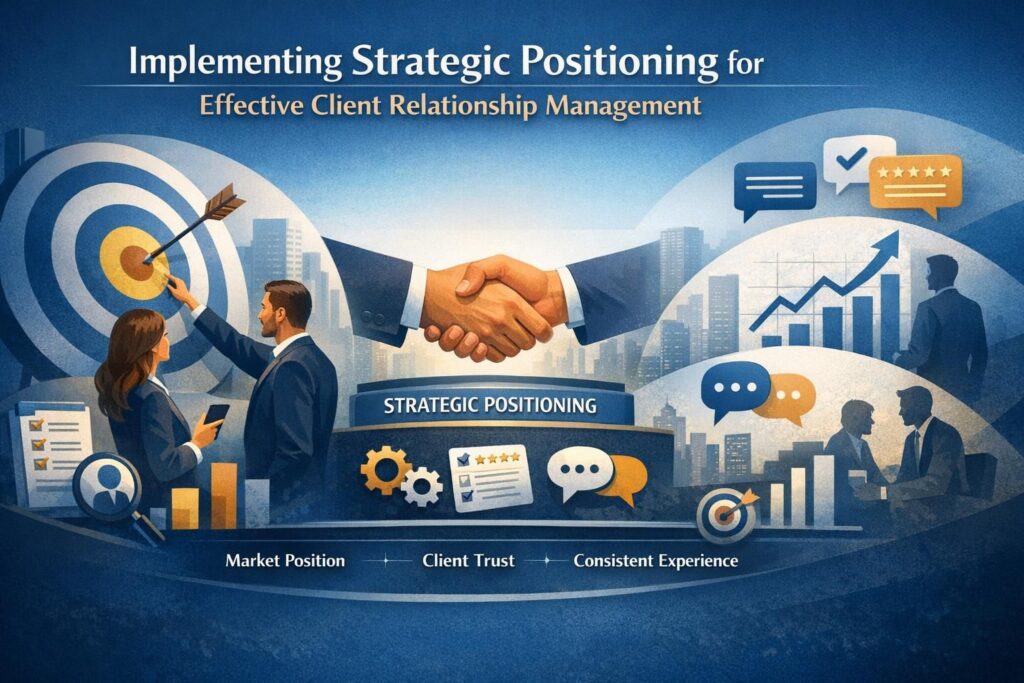
Implementing Strategic Positioning for Effective Client Relationship Management
A structured, strategic approach to positioning is essential for effective client relationship management. It helps business owners understand their place in the market and how they connect with clients. When a business has a clear position, clients know what to expect, which builds trust and satisfaction.
Every decision made, from marketing messages to service delivery, should reflect this position. If a business claims to prioritize customer service but fails to respond to inquiries promptly, clients will feel let down. This disconnect can harm trust and ultimately affect business growth.
Strategic positioning also means reviewing how clients perceive the business. Are they seeing value in services offered, or are they confused? Regular feedback can uncover these insights. This process allows businesses to adjust their positioning based on real client concerns.
Moreover, a strong position in the market ensures consistency in client interactions. This consistency helps manage expectations and reduces misunderstandings. When clients have a clear and positive experience, they are more likely to stay loyal.
By actively managing their strategic positioning, businesses can turn client relationships into a key driver of growth. This approach not only enhances client satisfaction but also aligns relationships with overall business goals. Ultimately, effective positioning leads to stronger partnerships that support long-term success.
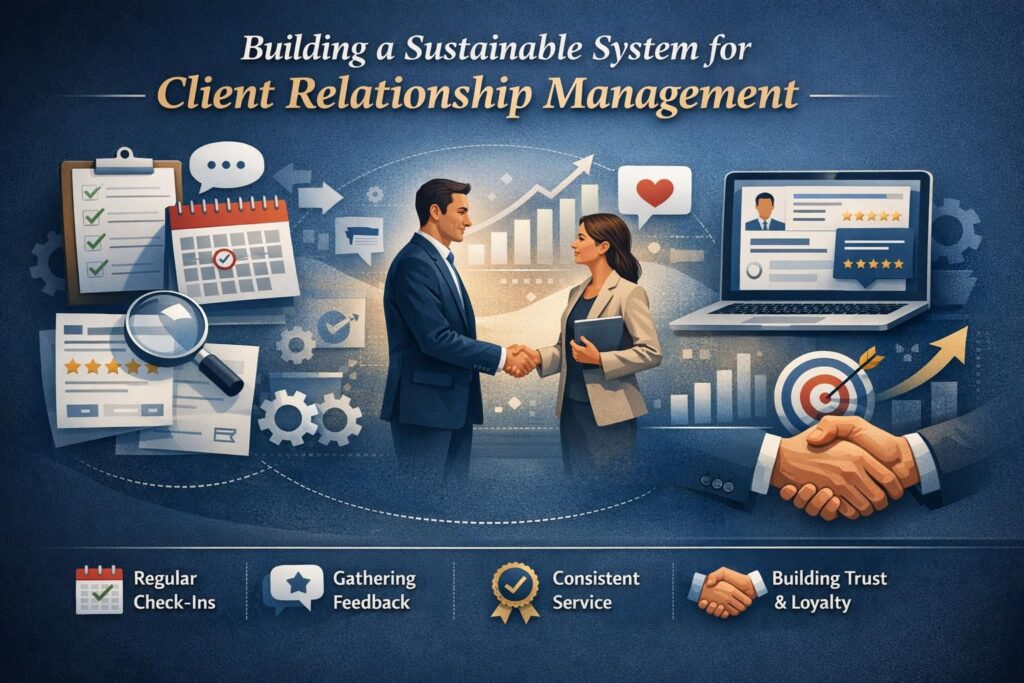
Building a Sustainable System for Client Relationship Management
Creating a sustainable system for client relationship management is key to growing a business. A strong system helps owners understand client needs and expectations. When these needs are met consistently, clients are happier and more likely to stay.
Every business can benefit from having repeatable processes. This means setting up steps to manage client relationships in a clear way. For example, regular check-ins can help catch issues early. These touchpoints show clients they are valued and listened to. It also makes it easier to address any misunderstandings quickly.
A good system also includes gathering feedback from clients. Asking for their thoughts helps spot areas that need improvement. It also keeps the lines of communication open, building trust.
Consistency is vital. When clients receive the same high-quality experience every time, they know what to expect. This reduces confusion and dissatisfaction. As a result, businesses can focus on growth without losing clients.
Overall, a strong client relationship management system improves loyalty. It creates a foundation for lasting client connections. In turn, this allows a business to scale effectively, all while maintaining positive relationships. Short and straightforward practices can lead to significant gains, ensuring that client management is not just a task, but a driver of success.
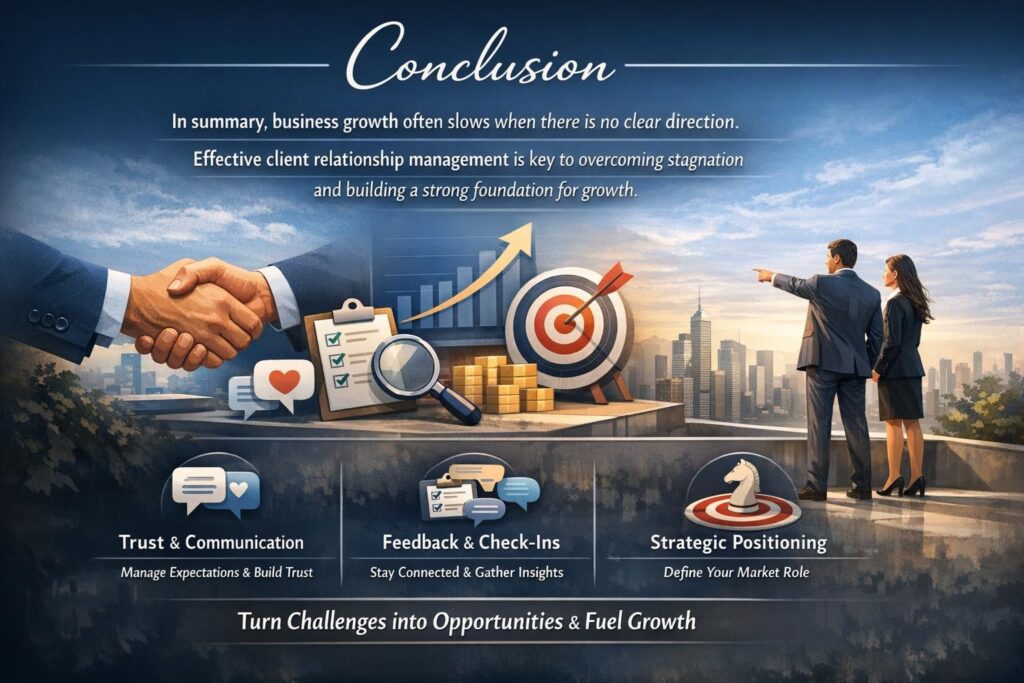
Conclusion
In summary, business growth often slows when there is no clear direction. Throughout this article, it has been shown how effective client relationship management is vital for overcoming stagnant periods. By understanding client needs and expectations, business owners can create a strong foundation for growth.
When expectations are managed well, clients feel valued and trust grows. Clear communication helps address hidden issues before they escalate. Simple systems, like regular check-ins and gathering feedback, keep the focus on what matters most. These systems allow businesses to handle relationships effectively, making growth easier to navigate.
Moreover, strategic positioning ensures that everyone knows what to expect. A clearly defined role in the market not only builds trust but also strengthens client partnerships. Ultimately, when business owners prioritize client relationships, they nurture long-term connections that fuel growth.
By applying these ideas, owners can turn challenges into opportunities. A proactive approach can reveal the path forward, making it easier to manage business growth. With a clearer perspective on client relationship management, business owners are better equipped to thrive.