






Introduction
Many business owners face a frustrating problem: they feel busy but see little progress. Sales may stagnate, growth may seem unpredictable, and success may feel just out of reach. This can lead to confusion and a desire to explore new tactics. However, simply adding more strategies often doesn’t work for businesses that are past their early stages.
One reason for this is cognitive bias. This is when decisions are affected by emotions or preconceived ideas. When buyers are influenced by these biases, they can overlook important information, leading to missed opportunities. Recognizing these patterns is crucial. Without clear direction and simple systems in place, it becomes harder to navigate these challenges.
Understanding the role of cognitive bias in sales helps business owners uncover what is holding them back. A lack of cohesive strategies can create friction between sales and marketing, further complicating efforts for growth. By focusing on clarity and aligning these teams, businesses can create a smoother path for customers.
In this article, we will explore the impact of cognitive biases in sales, identify common pitfalls, and discuss effective strategies to enhance decision-making and sales performance. This journey of understanding will empower business owners to break through barriers and achieve steady growth.
Understanding Cognitive Bias in Sales
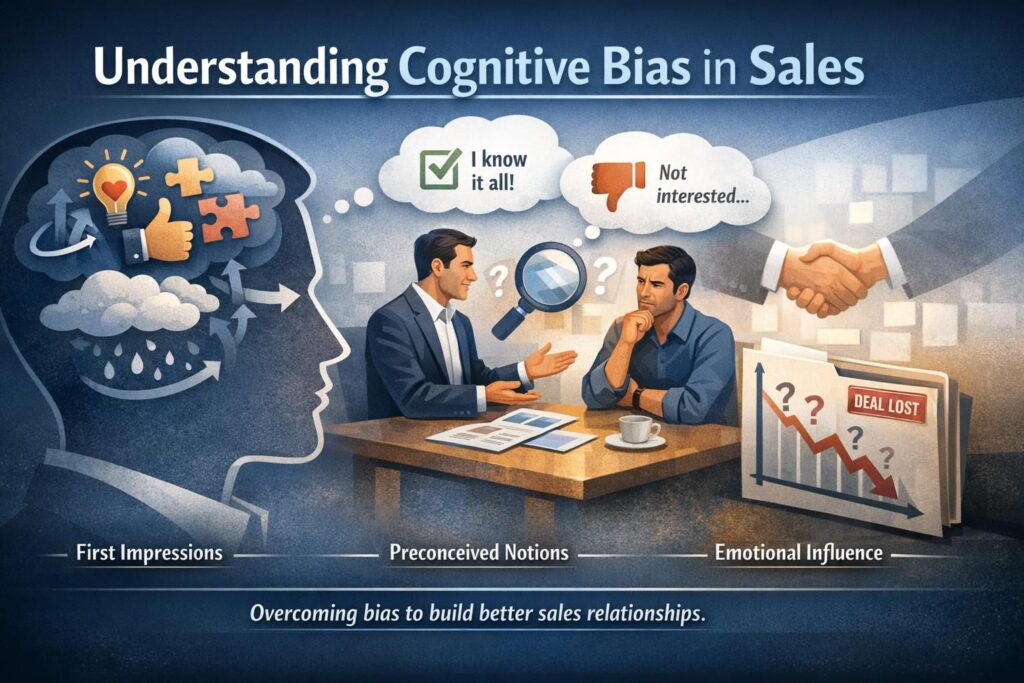
Cognitive bias is a common issue in sales. It affects how buyers make decisions. Often, buyers don't realize their choices are influenced by emotions or preconceived ideas. This makes selling more complex and can lead to misunderstandings.
For instance, buyers might believe they already know everything they need to know about a product. This belief can close them off to new information. Or, they may judge a product based on first impressions, ignoring valuable facts. These biases can cloud judgment and create barriers in the buying process.
Sales teams often struggle because they don’t fully grasp these biases. Understanding cognitive bias helps businesses see what holds back potential sales. It reveals why some deals fall through or why customers hesitate. When salespeople recognize these patterns, they can change their approach.
By acknowledging cognitive biases, companies can refine their sales strategies. This leads to better connections with customers and helps build trust. A deeper understanding of how bias influences decisions is crucial for any sales strategy.
Common Cognitive Biases Affecting Purchase Decisions
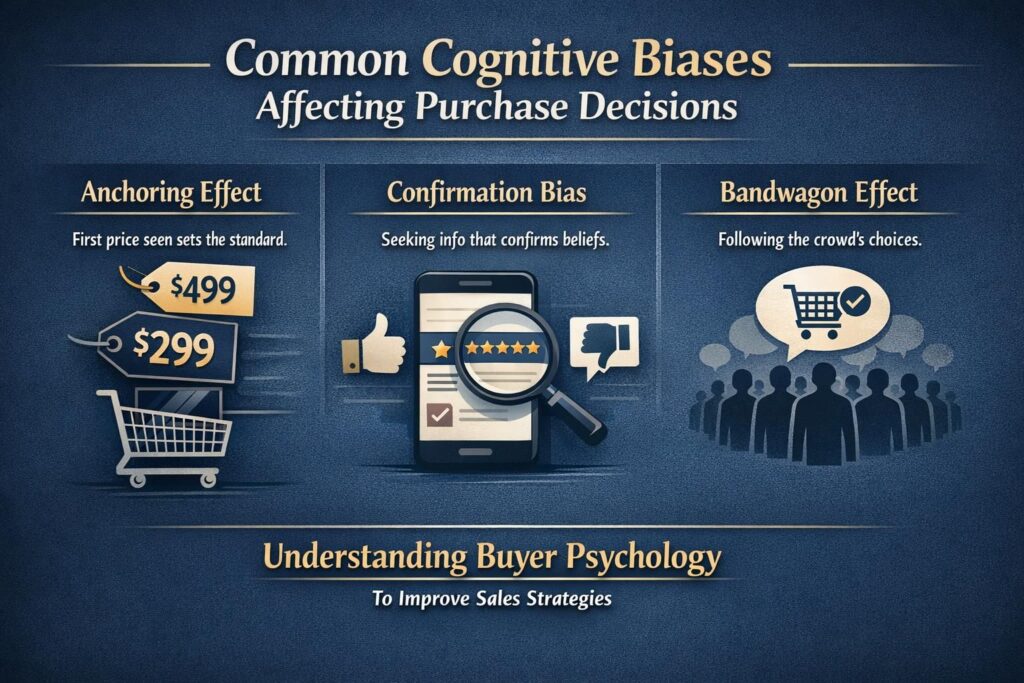
Cognitive biases can significantly impact how customers make decisions. These biases are mental shortcuts that help people process information but can also lead to poor choices. One common bias is the anchoring effect. This occurs when buyers base their decisions on the first piece of information they receive. For example, seeing a high-priced item first can make other prices seem cheaper, even if they are still above budget.
Another bias is confirmation bias. This happens when customers seek out information that supports their pre-existing beliefs. If a buyer thinks a brand is the best, they will focus on positive reviews and ignore negative ones. This can create a false sense of security and prevent buyers from exploring better options.
Then, there’s the bandwagon effect. People often like to follow the crowd. If many others are buying a certain product, potential buyers may think it’s the best choice, regardless of its actual value. This pressure can lead to rushed decisions without careful consideration.
Understanding these biases is important for business owners. It helps them see how these mental traps can block potential sales. By recognizing these common biases, businesses can better align their marketing strategies to guide customers through the buying process more effectively.
Recognizing Bias-Driven Sales Friction
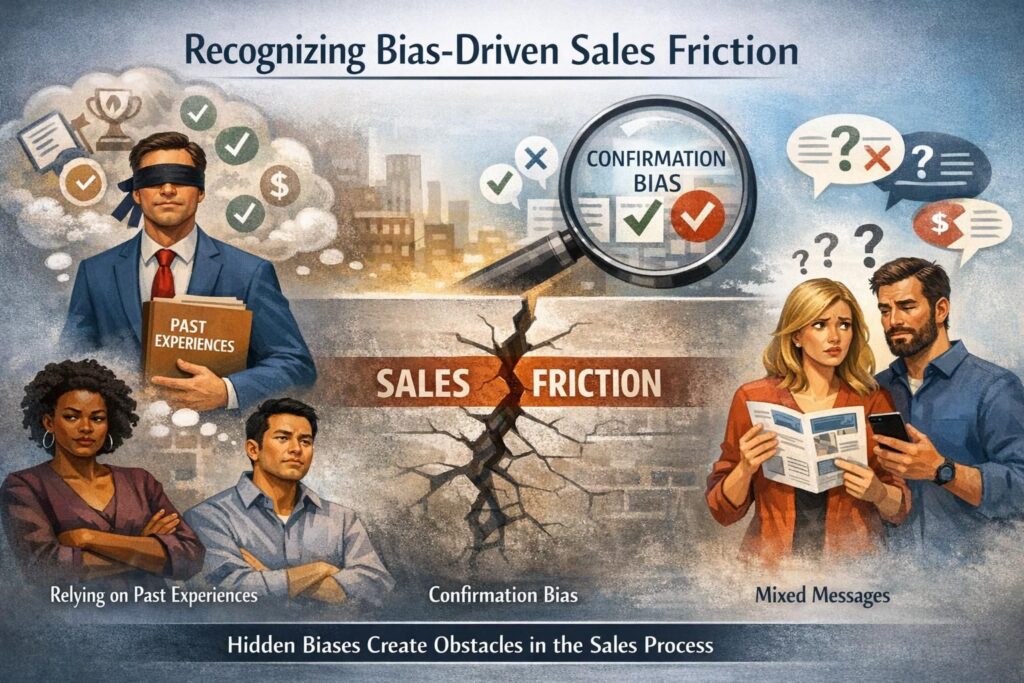
Daily decisions in sales can be influenced by hidden biases. These are mental shortcuts that can lead to poor choices. For example, a salesperson may rely too much on their past experiences. This can cloud their judgment and affect how they interact with potential buyers.
Biases can create friction in the sales process. When a salesperson focuses only on quick wins, they might overlook the needs of a customer. This can make customers feel undervalued, leading them to move on without making a purchase.
Another common bias is confirmation bias. This happens when salespeople seek out information that supports their beliefs. They may ignore signs that suggest a product is not right for a customer. This can stall the sales process and hurt overall growth.
Even small decisions can add up. If sales and marketing teams do not communicate effectively, misaligned messages can confuse potential buyers. This confusion is another form of friction, making it harder for customers to commit.
Recognizing these biases is the first step towards smoothing out the sales process. By becoming aware of these patterns, business owners can start to identify where growth is stalled. With this knowledge, it’s possible to create a more effective sales strategy that truly meets customer needs.

How Misaligned Sales and Marketing Amplify Bias Effects
Misalignment between sales and marketing can create problems that make it harder for businesses to grow. When these teams do not work well together, they send mixed messages to potential customers. This confusion can deepen buyers' biases and hinder their decision-making.
For example, if marketing focuses on flashy ads that emphasize low prices, but sales emphasize product quality, customers may feel uncertain. They may trust one message over the other or become frustrated with conflicting information. This inconsistency can lead buyers to delay decisions or even abandon purchases altogether.
Moreover, when sales and marketing teams do not share data or understand each other’s goals, they risk amplifying existing cognitive biases. Salespeople may rely on outdated information about customer preferences, while marketers might miss valuable insights from the sales floor. This gap makes it challenging to address biases effectively.
Inconsistent communication and lack of teamwork can create friction in the buyer's journey. Buyers may encounter barriers, leading them to question their choices. By aligning sales and marketing, businesses can present a unified message and create a smoother experience for potential customers. This alignment helps reduce the influence of cognitive biases and clarifies the path to purchase.

The Role of Strategic Systems in Mitigating Bias
Strategic systems are essential for reducing the impact of cognitive biases in business. These systems help create clear processes that guide everyday decisions. When decisions are based on structured systems, it becomes easier to spot biases that can lead to mistakes or missed opportunities.
For example, having a consistent method for gathering customer feedback can highlight patterns that reveal bias in sales strategies. By regularly analyzing this feedback, business owners can identify when emotions or preconceived notions interfere with sound decision-making.
Another vital part of strategic systems is setting measurable goals. This allows for tracking progress objectively. When businesses measure success against specific benchmarks, they create accountability. This reduces the chances of bias influencing decisions, as choices can be based on data rather than gut feelings.
Additionally, training team members on recognizing biases can be part of these systems. Offering regular workshops or discussions encourages awareness. When everyone understands bias, it becomes easier to work together to mitigate its effects.
Incorporating strategic systems helps businesses create a culture of informed decision-making. By focusing on structure and data, owners can navigate the complexities of growth more effectively and minimize the confusion that biases often create.

Cognitive Reframing for Enhanced Sales Performance
Cognitive reframing helps business owners see problems in a new light. This practice can change how they approach their sales strategies. When they encounter bias, reframing allows them to shift their perspective. Instead of thinking, "This customer won't buy," they can reframe it to, "What can I do to engage this customer better?"
One practical technique is to ask different questions. Instead of focusing on why sales are slow, ask what can be done to make sales processes smoother. This often reveals hidden opportunities. For example, a business owner might discover that their messaging is unclear. That realization can lead to better customer engagement.
Another effective method is visualizing success. By imagining a positive outcome before meetings or pitches, owners can reduce anxiety driven by bias. This boosts confidence, which in turn improves communication with potential customers.
Reframing also involves recognizing internal biases. Business owners can reflect on situations where they jumped to conclusions. They may find that these assumptions limited their actions. By becoming aware of these triggers, they can approach potential sales with a fresh mindset.
Implementing cognitive reframing can lead to clearer thinking. It empowers business owners to challenge established views. This not only helps overcome biases but also leads to stronger sales performance and growth.

Conclusion
Slowed business growth often stems from a lack of clear direction and the influence of cognitive bias in sales. When business owners focus on busy work without a structured strategy, they may overlook key opportunities. Cognitive biases, like the anchoring effect and confirmation bias, cloud decision-making and disrupt sales processes.
Recognizing and addressing these biases is essential. Business owners must develop simple systems that align sales and marketing efforts. Doing so creates a unified message, reduces confusion, and improves customer experiences. By focusing on clarity and open communication, businesses can navigate the challenges that biases create.
Furthermore, implementing strategic systems allows for better decision-making. Structured processes help owners identify biases in their sales approaches and empower them to respond effectively. By measuring success and encouraging team training, businesses cultivate a culture of informed decision-making.
Ultimately, a clear perspective on cognitive biases and a commitment to effective strategies will ease the path to growth. With these tools, business owners can engage customers more meaningfully and foster long-term success. Understanding that growth is a journey guided by awareness and simplicity should leave entrepreneurs feeling empowered as they move forward.