





Introduction
Many business owners experience a frustrating sense of being busy but not really moving forward. They might find themselves juggling endless tasks, yet growth feels stagnant or unpredictable. This is a common problem that can leave leaders confused about what to do next. When businesses reach a certain stage, simply adding more tactics often falls short. It can be overwhelming to try every new method, leading to more chaos than clarity.
Understanding the difference between strategic systems and operational processes is essential for breaking through these barriers. Strategic systems provide a clear direction and long-term vision, helping businesses plan effectively for the future. On the other hand, operational processes focus on the execution of day-to-day tasks. While both are important, a lack of strategic systems can lead to missed opportunities and repeated mistakes.
Without a guiding framework, business owners may feel like they are constantly reacting to problems instead of proactively pursuing growth. Establishing clear strategic systems and simple procedures can lead to steadier growth and greater focus. This article will explain how aligning these elements can create the paths needed for lasting success. As we explore these topics, readers will gain insights into harnessing their business’s full potential.
Understanding Strategic Systems vs Processes in Business Growth
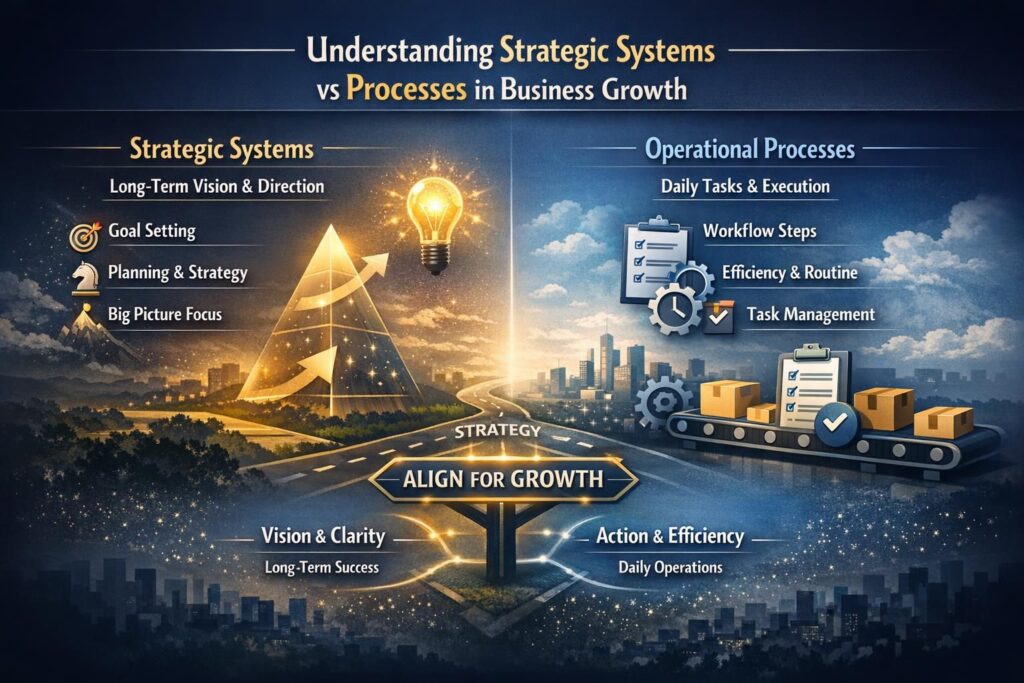
In business, it's important to know the difference between strategic systems and operational processes. Strategic systems are ways of thinking that help business owners make long-term decisions. They provide a framework for understanding goals and setting directions. These systems guide how a business should grow and adapt over time.
On the other hand, operational processes are the specific steps taken to get things done. They focus on day-to-day tasks and efficient execution. While processes are essential for managing daily operations, they often work best when grounded in a strategic system. This combination helps a business not just survive, but thrive.
Without a clear strategic system, business owners may feel overwhelmed. They might find themselves reacting to problems instead of planning for the future. This can lead to confusion and slow growth. In contrast, when strategic systems are in place, they bring clarity. They create a roadmap that helps leaders navigate through challenges and focus on meaningful progress. Understanding this difference between strategic systems and operational processes is the first step toward renewed growth and stability in any business.

The Role of Strategic Systems in Guiding Long-Term Business Decisions
Strategic systems are the frameworks that help businesses set clear directions. They go beyond daily tasks and improve decision-making at higher levels. This includes choosing goals, setting priorities, and finding ways to achieve growth. In contrast, operational processes focus on the “how” of getting things done.
Without strong strategic systems, businesses can drift. Owners might react to problems instead of planning for the future. This can lead to missed goals and lost opportunities. Strategic systems help owners make smarter decisions by aligning actions with long-term visions.
For example, if a business wants to expand to new markets, a strategic system will guide how to evaluate those opportunities. It will help owners think about what risks to take and what resources are needed. This structured approach leads to more consistent results over time.
In short, strategic systems provide a roadmap for long-term success. They help narrow down choices so that businesses can focus on what truly matters. By establishing clear directions, business owners can steer their companies toward growth with confidence, rather than merely keeping up with daily demands.

Why Operational Processes Alone Won’t Sustain Business Scaling
Many business owners depend heavily on their daily tasks and processes to drive growth. However, relying only on operational processes can become a trap. This approach may lead to burnout and frustration. When only focused on execution, businesses often miss bigger opportunities for advancement.
Operational processes are necessary for getting things done, but they can create a cycle of reacting instead of planning. For example, a business may struggle with sudden problems that arise, causing chaos and confusion. This situation can lead to repeated mistakes and even the same issues popping up time and again. The result is lost time and resources.
Furthermore, when daily tasks consume all energy and attention, little time is left for strategic thinking. Without this reflection, it's easy to drift away from long-term goals. Growth becomes uneven, and success feels random. Each day, business owners may find themselves working harder but not getting ahead.
A balanced approach that includes strategic systems is essential. By pairing efficient operational processes with a clear vision, businesses can create a path that leads to consistent growth. This combination allows for smarter decisions, better alignment among teams, and a focus on opportunities rather than just problems.

Common Signs Your Business Lacks Strategic Systems
Many businesses face clear signs that indicate they lack effective strategic systems. One major sign is reactive decision-making. When business owners only respond to issues as they arise, it shows they lack a guiding framework for their choices. This constant fire-fighting prevents long-term planning and growth.
Another common signal is repeated bottlenecks. If certain parts of the business consistently slow down operations, it indicates that the processes need better alignment with overall goals. Without strategic systems, problems are not addressed at their source.
Inconsistent sales performance can also point to a lack of strategic systems. If sales numbers fluctuate significantly without a clear understanding of why, it may mean that the business is not following a solid strategy. Businesses need well-defined objectives to track progress and identify what works best.
Additionally, if team members frequently misunderstand their roles or the overall vision, it shows that the strategic system lacks clarity. Clear communication of goals is essential for keeping everyone on the same page.
Recognizing these signs allows business owners to understand what’s missing from their approach. A lack of strategic systems leads to confusion, inefficiencies, and missed chances for growth. It’s crucial to evaluate these red flags to foster a healthier business environment moving forward.

Aligning Sales and Marketing Through Strategic Thinking, Not Just Processes
Many businesses struggle to connect their sales and marketing efforts. This misalignment often happens when strategic systems are unclear or absent. Without a strategic framework, teams may work in silos, missing opportunities to collaborate effectively.
Sales may focus on closing deals, while marketing looks to attract leads. If both teams don’t share the same vision or goals, efforts can become disconnected. This can lead to wasted resources and inconsistent messaging.
For example, if marketing promotes a product feature that sales is not emphasizing, potential customers can get mixed signals. When customers see conflicting information, it can reduce trust and make them hesitate to buy.
Regular meetings between sales and marketing teams can help fill this gap. These discussions should focus on shared goals and customer insights. Aligning both teams under a single strategic system ensures that everyone understands the business’s direction and objectives.
Successful alignment requires ongoing commitment from leadership. They should encourage a culture of collaboration and shared responsibility. When sales and marketing work together through strategic thinking, they can create a stronger approach to customer acquisition. This collaboration supports sustainable growth and helps the business succeed in a competitive market.

Building Strategic Systems to Support and Scale Your Processes
Strategic systems serve as the backbone of a business, helping to organize thoughts and actions. When a business owner creates clear thinking frameworks, it becomes easier to connect daily tasks with long-term goals. This connection is vital for successful scaling.
Imagine trying to build a tall building without a solid foundation. Just like that, businesses need strategic systems to support their everyday operations. These systems guide decision-making and set priorities. They provide the structure necessary for efficient action, keeping teams aligned and focused.
When a business has strong strategic systems in place, common challenges start to fade. For example, repetitive tasks become more manageable, and new ideas for growth surface more freely. Teams can follow established routes to success, reducing wasted time and effort.
Additionally, strategic systems help businesses track progress. They allow owners to measure outcomes and adjust plans when needed. This active monitoring keeps growth steady and purposeful. As a result, scaling becomes less chaotic and more achievable.
In essence, building these supportive systems transforms chaotic business habits into clear pathways that lead to growth. It fosters an environment where teams are not just working hard, but also working smart to reach their full potential.

Conclusion
In conclusion, understanding the difference between strategic systems and operational processes is key to effective business growth. This article has highlighted how strategic systems provide a clear vision while operational processes focus on daily tasks. Growth often slows when there is no clear direction, leaving business owners feeling overwhelmed and reactive.
By establishing simple systems and fostering clear thinking, businesses can create a meaningful path to progress. Strategic systems help steer decisions and align tasks with long-term goals, reducing chaos in operations. When leaders have a clear roadmap, they can navigate challenges with confidence, focusing on opportunities instead of merely responding to problems.
Recognizing the signs that indicate a lack of strategic systems is crucial. It allows business owners to address issues at their core rather than letting them persist. By blending strategic systems with efficient operational processes, businesses can achieve consistent growth and better alignment among teams. This balanced approach ultimately transforms how a business operates, creating a more focused and productive environment. With the right systems in place, business owners can pursue their goals with clarity and purpose, making growth a more manageable and rewarding journey.