





Introduction
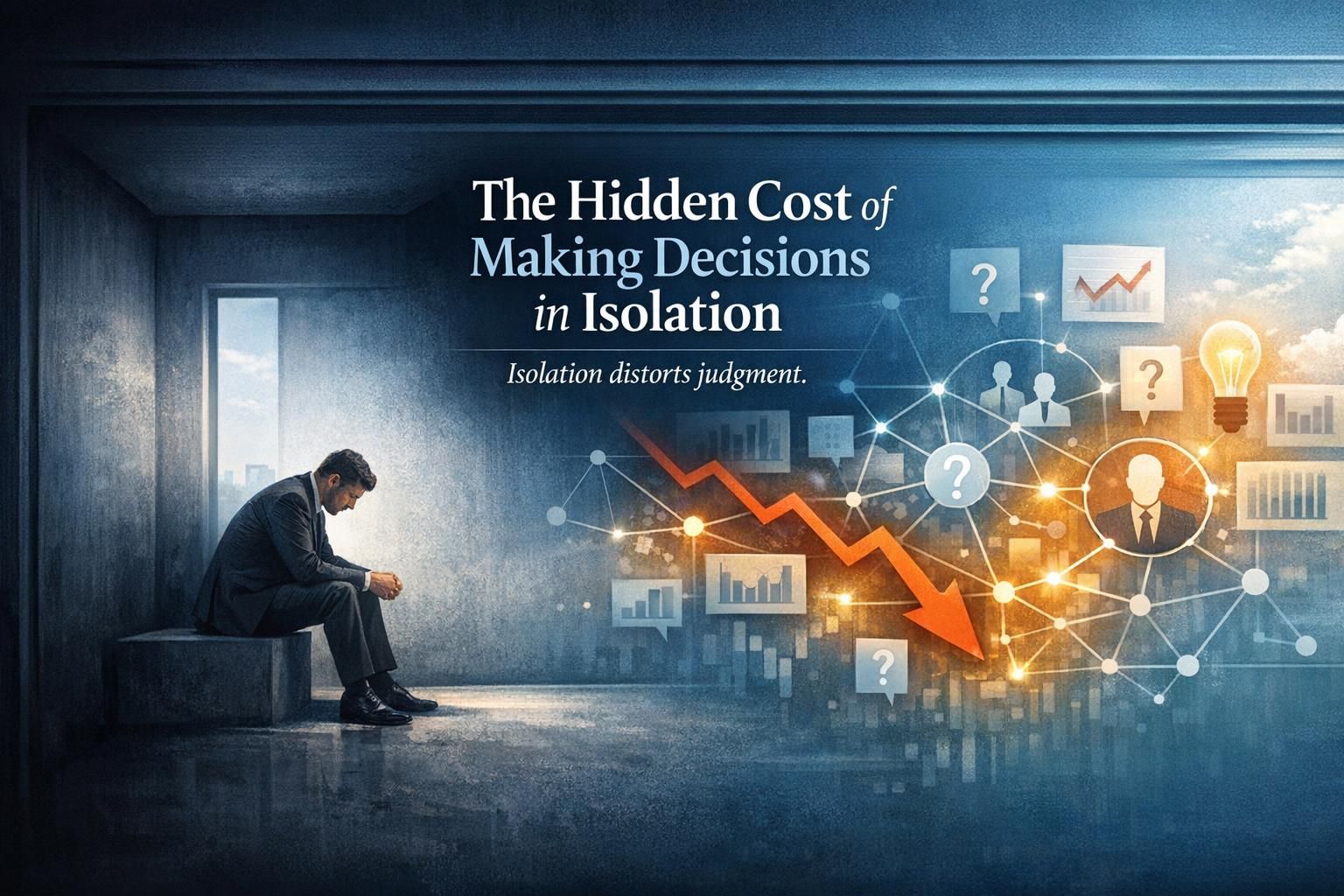
Many established business owners reach a point where growth seems to stall or feels unpredictable. They might be busy each day, but their efforts don’t lead to real progress. This often happens due to a common issue: isolated decision making. When decisions are made without input from others, important perspectives can be missed. This narrow approach can lead to mistakes, as business owners may cling to outdated strategies or biases.
Relying solely on personal judgment may provide a false sense of security. A company might seem stable, but deeper issues could be lurking beneath the surface. Stagnant growth often results from missed opportunities and the inability to adapt to market changes. Teams that work in silos limit their potential by not collaborating. Each department has unique insights that, when combined, can sharpen strategic direction and drive growth.
To break out of this cycle, business owners need to embrace clear goals and simple systems. Engaging diverse viewpoints leads to better decision making and innovation. In the sections that follow, this article explores how isolated decision making impacts business strategy and what steps can be taken towards fostering collaboration for consistent growth.
How Isolated Decision Making Skews Strategic Judgment
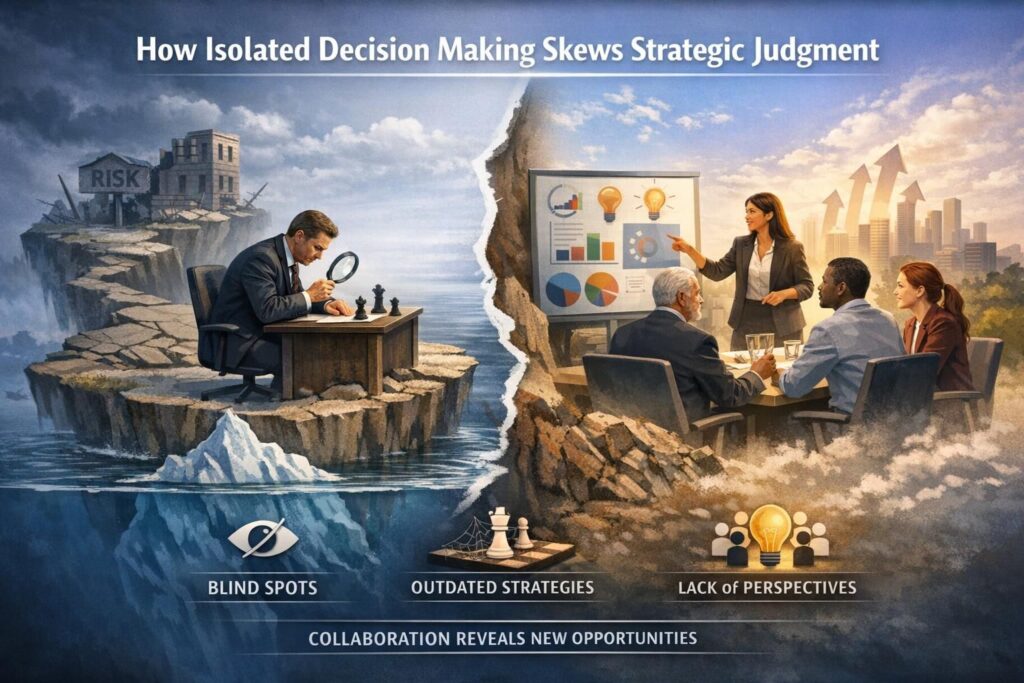
When business owners make decisions alone, they can overlook important details. Their view may become narrow, limiting their ability to see the bigger picture. This type of decision making often leads to mistakes because it ignores valuable perspectives from others. Different teams and people bring unique insights that can highlight blind spots.
Without input from others, biases become stronger. Owners may stick to what they believe is right, even when evidence suggests otherwise. This can create a false sense of security. A business might feel stable, but it could be on shaky ground without realizing it.
Thinking too independently can trap a business in outdated strategies. Fresh ideas may not be explored, and opportunities for growth may be missed. Decisions made in isolation tend to reflect past practices rather than current market needs.
Involving others in decision making can help challenge these biases. It encourages broader thinking, leading to better outcomes. Bringing diverse viewpoints into discussions can reveal new paths and help avoid pitfalls. Decision making should not be a solo effort; collaboration can unlock innovation and drive meaningful growth.
The Role of Confirmation Bias in Business Growth Stagnation
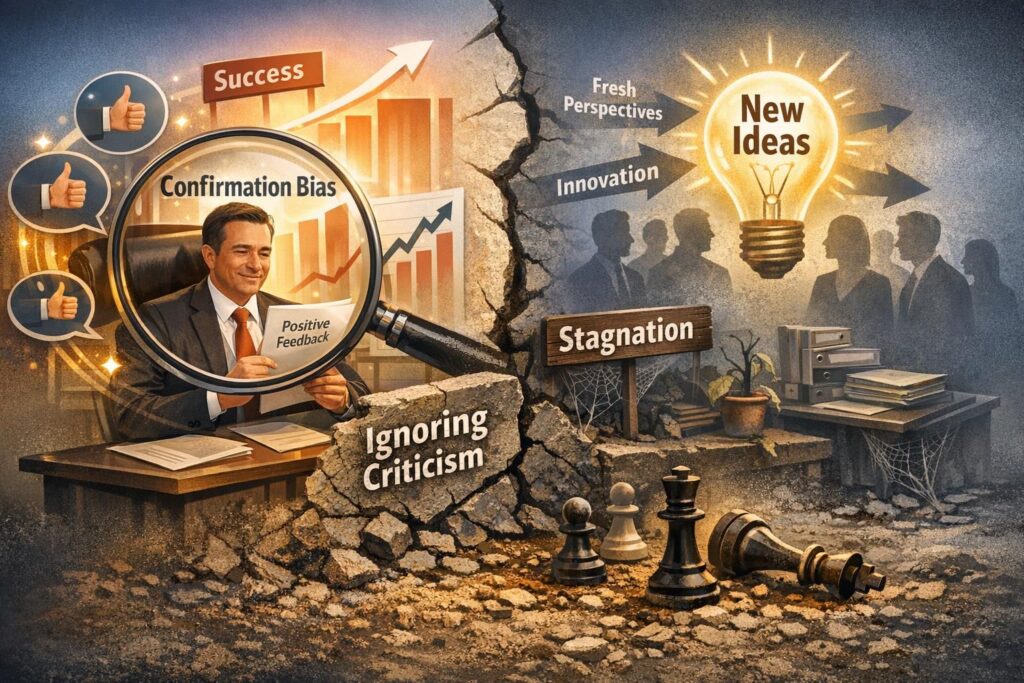
When decision-makers work alone, they often fall into a trap called confirmation bias. This means they tend to favor information that supports their existing beliefs while ignoring any that challenges them. This mindset can block fresh ideas and perspectives that are crucial for growth.
For example, a business owner might firmly believe their product is the best on the market. If they only listen to positive feedback and overlook constructive criticism, they risk missing important opportunities to improve. This reinforcement of old ideas can lead to a stagnant business, as no new strategies are formed.
Growth requires a willingness to explore new options and admit that previous strategies may not be working. Without outside input, leaders may not realize that stubbornly sticking to old assumptions can limit their potential. This lack of fresh thinking can stall innovation and prevent the business from adapting to changing markets.
In essence, isolated decision-making creates a narrow view of what is possible. When leaders fail to challenge their own assumptions, they inadvertently limit the growth potential of their business. To break free from this cycle, it is vital to encourage diverse viewpoints and be open to new ideas. Embracing this kind of collaboration can lead to sustainable growth and long-term success.

Missed Opportunities from Lack of Cross-Functional Insight
Isolated decision making can create silos within a business. When teams, like sales, marketing, and operations, work separately, they miss chances to share valuable insights. Each team has different experiences and perspectives. Combined, these can lead to smarter decisions and better strategies.
Without communication between departments, ideas can overlap or conflict. This inconsistency can confuse customers and slow down growth. For example, marketing may promote a product differently than how the sales team pitches it. This lack of unity can lead to missed sales opportunities.
Cross-functional collaboration helps break down these barriers. When teams share their knowledge and insights, they can spot gaps in the market. They can also identify customer needs more accurately. This teamwork creates a clearer picture of how different parts of the business fit together.
Siloed thinking can also lead to wasted resources. Companies may pursue strategies that do not align with the overall business goals. By communicating across functions, a company can use its resources more effectively and make better strategic choices. In the end, businesses that foster collaboration are more likely to thrive and grow.

Why Complex Growth Problems Require Outside Perspective
When a business struggles, it often lacks fresh ideas and viewpoints. Teams working in silos can miss big problems. This is because they may rely too much on their own experiences. Without outside input, teams may overlook important issues. External perspectives can shine a light on potential solutions that internal teams may not see.
Engaging with advisors or industry experts can help a business identify blind spots. These are areas where the team may not even realize they need to improve. An outside perspective can provide new frameworks for thinking about challenges. This encourages teams to view problems differently. Instead of getting stuck, businesses can find innovative ways to move forward.
Using objective feedback helps create a clearer picture of what’s not working. It can reveal how assumptions might be holding back growth. For example, a sales team may think they understand customer needs. However, feedback from a marketing team or external consultant could highlight different priorities.
By inviting external insights, businesses can break free from repetitive patterns. Complex growth problems often require collaboration across different areas. Over time, this approach can lead to smarter decisions and healthier growth. Recognizing the value of outside perspectives can make all the difference.
The Compounding Cost of Internal Echo Chambers
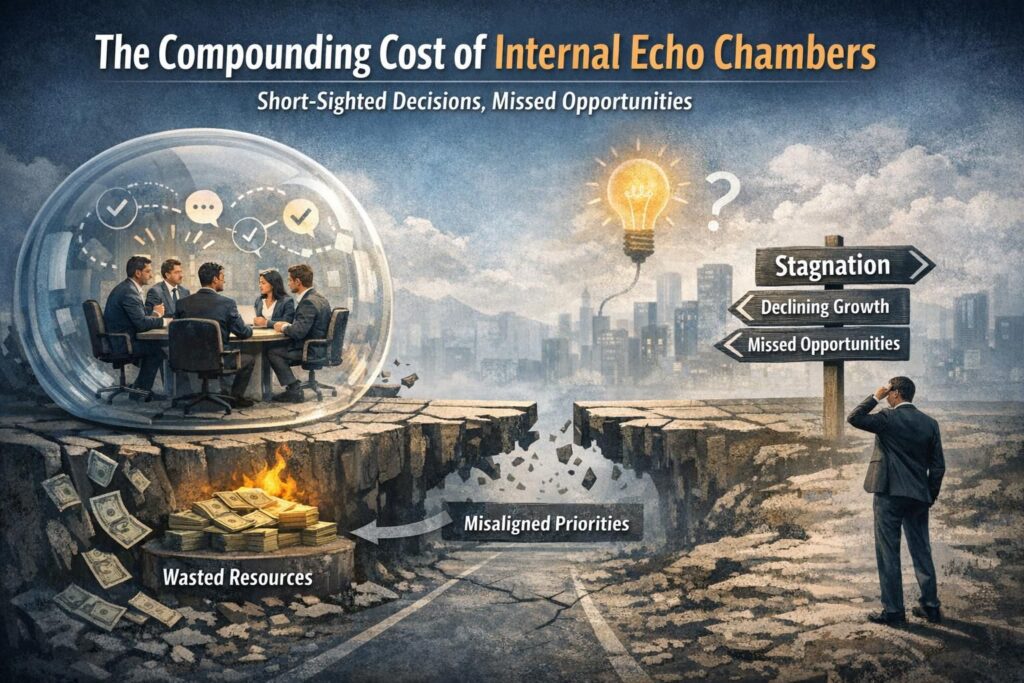
Recurring isolated decision making can have serious consequences for a business. When teams rely only on their own thoughts and ideas, they can lose sight of the bigger picture. This often leads to misaligned priorities. What seems important in a narrow view may not align with overall goals.
Additionally, relying solely on internal feedback can waste resources. Teams may spend time and money on projects that don't match market needs or customer expectations. This lack of outside perspective means that businesses might miss opportunities for better solutions or innovations.
Over time, this can cause a loss of momentum. Decisions made in an echo chamber create a cycle of reinforcing existing beliefs. As this cycle continues, growth can feel stagnant and confusing. Teams may wonder why their efforts are not yielding results, even after significant investment.
By recognizing the pitfalls of internal echo chambers, business owners can start to see how daily habits and decisions impact overall success. Understanding these patterns is crucial for reversing negative trends and fostering a culture of open collaboration. When decision making includes various viewpoints, businesses can better align resources and efforts, leading to more sustainable growth.

Turning Isolation into Strategy Through Collaborative Thinking
Isolated decision-making can slow down business growth. When leaders rely only on their own insights, they miss out on valuable perspectives from their team. By involving others, businesses can make more informed decisions.
Collaborative thinking encourages sharing ideas and challenges. This process helps teams identify blind spots that an individual might overlook. For example, when sales, marketing, and operations work together, they can better align their goals and strategies. This teamwork can lead to more effective plans and faster implementation.
Creating structured times for collaboration can also speed up learning. When team members share their experiences, they learn from each other. They can spot trends and make better forecasts for future growth. Advisory input from those with different expertise improves decision-making and uncovers new opportunities.
Moreover, collaboration helps maintain focus on shared goals. When everyone understands the bigger picture, it leads to united action across all departments. This approach can eliminate wasted time and resources that come from miscommunication.
Overall, turning isolation into strategy through teamwork not only drives growth but also enhances the company's ability to adapt. Embracing collaboration transforms decision-making from a narrow view into a broader, more effective strategy that supports sustained business success.

Conclusion
In conclusion, isolated decision making can significantly hinder business growth. This approach often leads to missed opportunities and creates blind spots, as important insights from various departments go ignored. A narrow focus makes it difficult for business owners to see the bigger picture, which can leave their strategies outdated and ineffective.
To foster sustainable growth, businesses should encourage collaboration and open communication among teams. By involving diverse perspectives in decision-making, companies can challenge biases and embrace fresh ideas. This collaborative environment allows teams to share valuable insights, aligning their goals and improving overall strategy.
Maintaining simple systems and clear objectives helps make growth easier to manage. When everyone is on the same page, it becomes simpler to navigate challenges and adapt to market changes. Businesses that prioritize teamwork and collective thinking are better positioned to turn obstacles into opportunities. Ultimately, a commitment to collaboration not only drives growth but also supports a healthier, more resilient business.