





Introduction
Many established business owners face a surprising challenge: their growth has slowed or feels uncertain. They may be busy every day but not actually moving forward. Something feels off, yet the reason isn't always clear. As the digital landscape changes, this confusion often deepens.
The trend toward cookieless marketing is a significant shift that affects how businesses connect with their audiences. For many, the common belief is that moving away from cookies limits their marketing options. However, more tactics alone won’t solve the problem, especially for businesses that have outgrown their early stage. As companies grow, they need clear direction and simple systems to keep moving forward.
Understanding that cookieless marketing offers new opportunities is essential. It encourages businesses to rethink how they gather and use customer data while respecting privacy. It also highlights the need for better alignment between sales and marketing teams. By clarifying goals and sharing insights, companies can find effective ways to engage their customers. This article will explore how to navigate these changes, dispel the myths surrounding cookieless marketing, and provide practical steps to foster steady growth in an evolving marketplace.

Understanding Cookieless Marketing: Beyond the Myths
Cookieless marketing focuses on reaching customers without relying on tracking cookies. Many business owners believe this shift limits their marketing options, but that’s not true. In fact, it opens new ways to connect with potential customers.
One common myth is that cookieless marketing means losing all data. This isn’t the case. While traditional tracking is changing, businesses can still gather insights through other means, like first-party data. This data is information collected directly from customers, such as through surveys or website interactions.
Another misconception is that cookieless environments only affect online businesses. All businesses will feel the impact, as consumer behavior adjusts to new privacy standards. Ignoring these changes can cause a business to fall behind. Understanding cookieless marketing is crucial for adapting strategies to engage effectively with audiences.
Many owners feel overwhelmed by the changes. Instead of seeing cookieless marketing as a barrier, it can be viewed as an opportunity for creativity. By exploring alternative methods that respect privacy, businesses can build trust with customers and enhance their marketing efforts. Recognizing the real meaning of cookieless marketing helps shed light on what businesses must do to keep growing effectively.

The Impact of Cookieless Environments on Business Growth
The shift to cookieless environments is important. It changes how businesses track customer behavior and measure success. Without cookies, businesses may struggle to gather data as they did before. This can expose weaknesses in their current growth strategies.
Many businesses rely heavily on traditional methods to reach customers. With cookies disappearing, these methods may no longer work. Companies might find it harder to connect with their audience and understand their needs. This can lead to missed opportunities and stalled growth.
When cookie-based tracking is removed, businesses often realize they do not know their customers as well as they thought. They may have focused too much on short-term wins instead of building long-term relationships. A cookieless world requires a fresh look at how to engage customers.
Growth plans that worked before might now feel uncertain. Businesses may need to rethink their approach to attract and retain customers. This could mean exploring new channels, such as social media or direct engagement. By adapting to these changes, businesses can uncover new paths to growth that they may not have considered before.
In short, the shift to cookieless marketing is a wake-up call. It pushes businesses to evaluate their strategies and become more customer-focused. This is essential for growth in an evolving market.
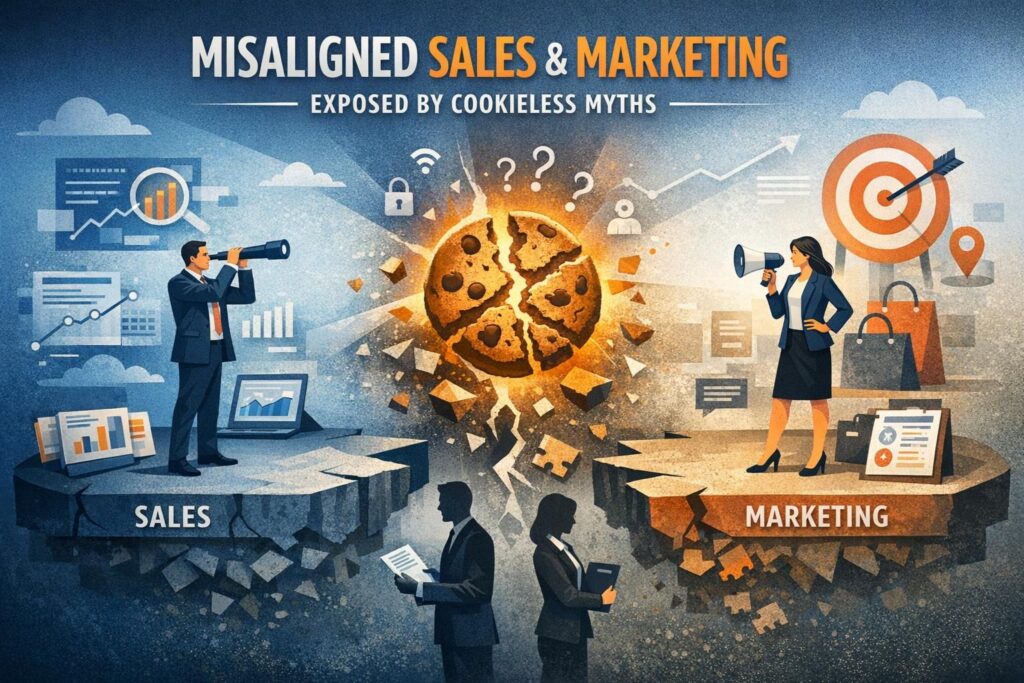
Misaligned Sales and Marketing Exposed by Cookieless Myths
Sales and marketing teams often work toward common goals, but sometimes they miss the mark. Cookieless marketing shines a light on these misalignments. When businesses believe myths about cookieless strategies, it can create confusion and hinder growth.
Many teams think cookieless marketing only affects digital ads. In reality, it influences how they connect with customers. Misunderstandings can lead to wasted resources and missed opportunities. For example, if one team focuses on online metrics while the other emphasizes offline strategies, they may pull in different directions. This leads to inconsistent messages and lost customers.
Also, teams may struggle to share valuable customer insights. If sales and marketing operate in silos, they miss key information that could guide strategies. When marketing fails to understand what customers want, it impacts sales. Similarly, if sales lacks marketing’s data on customer behavior, they might not effectively follow up on leads.
Addressing these gaps is crucial. By clarifying roles and improving communication, teams can align their efforts. Instead of seeing cookieless marketing as a challenge, they should recognize it as a chance to work better together. This teamwork is essential for sustainable growth as the market changes. When teams align, they can create effective strategies that resonate with customers in a cookieless environment.
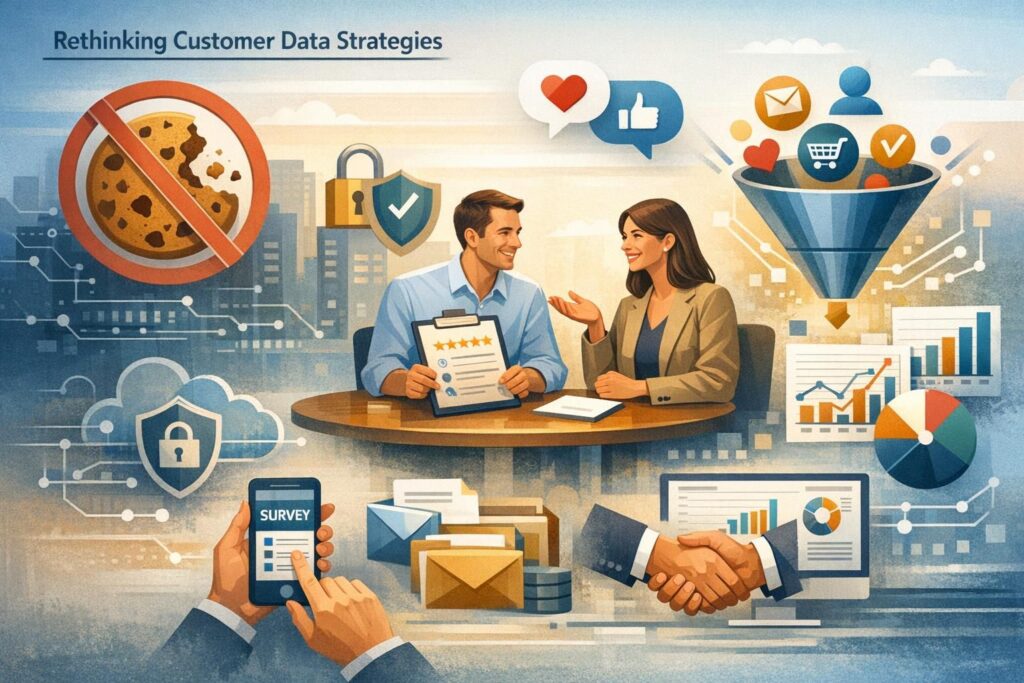
Rethinking Customer Data Strategies in a Cookieless World
In a cookieless world, businesses need to rethink their customer data strategies. Without cookies, tracking user behavior becomes harder, which can lead to gaps in understanding customer needs. These gaps often result in missed opportunities for growth.
Businesses must focus on collecting data directly from customers. This includes asking for feedback and encouraging customers to share their preferences. Engaging with customers can provide valuable insights that help create better products and services.
Another important aspect is building trust. Customers are more willing to share their information if they feel secure. Ensuring transparency about how data will be used can strengthen this trust. A customer-centric approach can lead to stronger relationships and loyalty, which are essential for long-term growth.
It is also useful to explore alternative data sources. This might involve using first-party data effectively, such as email lists or transaction histories. By analyzing this data, businesses can still understand customer behavior and improve their marketing strategies.
Ultimately, how a business gathers and uses customer data will influence its growth. Companies that adapt and innovate their data strategies will likely see positive results. Embracing these changes can turn challenges into opportunities in a cookieless environment.

The Role of Strategic Systems in Cookieless Success
Many businesses rely on cookies for tracking customers and driving sales. But when cookies disappear, their growth can stall. That's where strategic systems come into play. Without a plan, businesses may struggle to understand customer behavior and preferences.
Strong systems help business owners make decisions based on data, not guesswork. These systems include things like customer relationship management (CRM) tools and marketing automation platforms. They can streamline communication and improve customer engagement. When businesses invest in the right systems, they get a clearer picture of their customers.
Everyday decisions are crucial. For instance, a business owner may choose to ignore data from past campaigns. This decision can lead to repeated mistakes and lost opportunities. On the other hand, a simple review of available data can uncover trends. These trends help owners adapt their strategies for a cookieless world.
Creating efficient processes also prevents confusion among team members. When everyone knows how to use systems effectively, teamwork improves. This alignment boosts productivity and drives growth. In a changing landscape, having these systems in place can turn challenges into opportunities. By focusing on strategic systems, businesses can thrive even without relying on cookies.

Overcoming Scaling Confusions in Cookieless Marketing
Many business owners face challenges when trying to scale in a cookieless market. These challenges can stem from unclear marketing strategies and outdated practices. Without cookies to track customer behavior, businesses may struggle to understand how to reach their audience effectively.
Everyday decisions, like how to communicate with customers or how often to post on social media, can impact growth. If marketing strategies are not aligned with current realities, confusion can set in. For example, a business might spend a lot of time on ads that no longer connect with customers.
It’s important to rethink approaches and focus on direct communication. Building relationships through email or personal interactions can be much more effective. Using data in new ways, like feedback from customers, can also provide clearer insights into what works.
When a business understands these patterns, it can make practical changes. Adjusting marketing methods to fit customer needs in a cookieless world can clear up confusion and drive growth. By recognizing how daily actions influence outcomes, business owners can better navigate new challenges and improve their overall strategy.

Conclusion
Understanding cookieless myths is vital for business owners facing growth challenges. The article highlighted how the shift to cookieless marketing doesn't limit opportunities but opens new paths to engage customers. When growth slows, it often stems from unclear strategies and outdated methods. Without a clear direction, businesses can struggle to connect with their audiences.
A simple approach—using first-party data and enhancing team alignment—makes adapting to a cookieless world easier. By fostering clear communication between sales and marketing teams, businesses can overcome common misconceptions and streamline their efforts. This collaboration can lead to stronger relationships with customers and a deeper understanding of their needs.
Moreover, focusing on strategic systems helps businesses collect and analyze data effectively. These systems improve decision-making and prevent confusion during uncertain times. As companies evaluate their growth strategies, embracing these systems can reveal new opportunities to connect with customers.
In conclusion, navigating cookieless marketing requires rethinking approaches while simplifying processes. By letting go of outdated myths and embracing new methods, business owners can find clarity and drive sustainable growth in a changing landscape. A calm, collected perspective can transform obstacles into unique opportunities for success.