





Introduction
Many business owners face a frustrating reality: they feel busy but are not pushing forward. Growth has slowed, or it feels unpredictable. Sometimes, they can’t pinpoint exactly why. Others want to grow but feel pulled in different directions, unsure of where to focus.
A common issue arises when businesses get stuck competing on price. While this may seem like a quick path to sales, it often leads to lower profits and customer loyalty fades. As businesses grow, relying on new tactics without a clear direction can result in wasted resources and stagnant performance.
In this article, readers will discover how a brand over price strategy can break this cycle. This means focusing on building a strong brand identity instead of just lowering prices. Clear direction and simple systems are vital for achieving steady growth. By understanding the importance of a strong brand, business owners can develop lasting relationships with customers, positioning themselves for long-term success.
This article will provide insights into recognizing stalled growth, the dangers of price competition, and how effective branding leads to sustainable growth. With the right strategy, businesses can shift the focus from price to value, enabling them to thrive in a crowded market.
Understanding the Brand Over Price Strategy in Business Growth
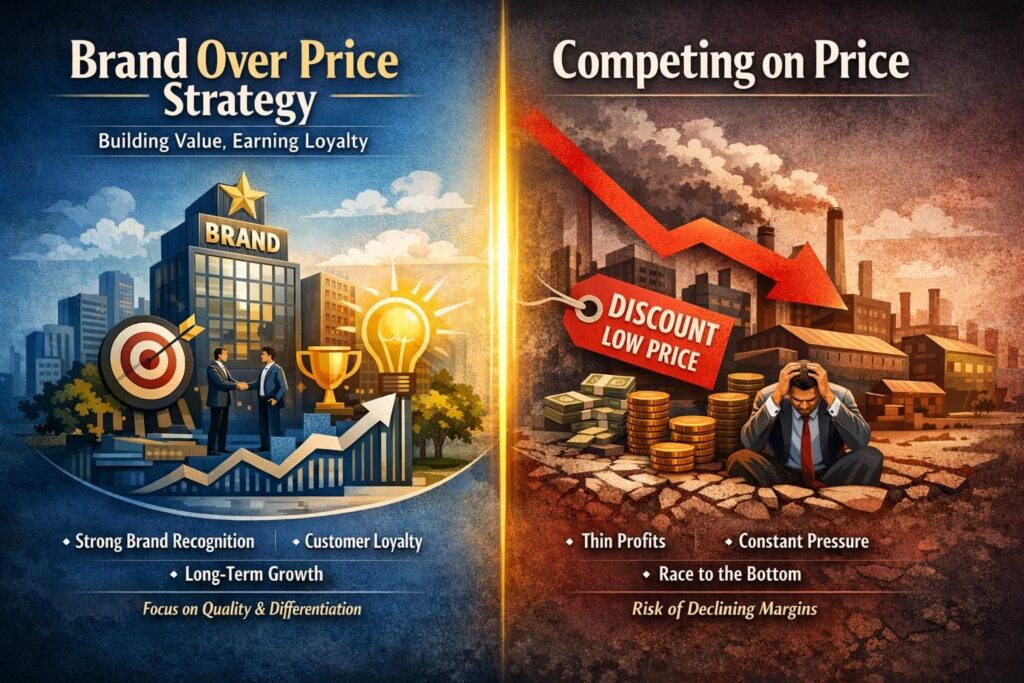
A brand over price strategy means focusing on building a strong brand rather than just lowering prices. This approach helps businesses create lasting value. When a business builds a recognizable brand, it earns trust and loyalty from customers. This can lead to more stable sales over time. Customers often prefer brands they know, even if they cost a bit more.
Competing mainly on price can be risky. It can lead to areas with thin margins and increased pressure to cut costs. In contrast, a strong brand helps businesses stand out. It allows them to offer unique benefits that customers can't find elsewhere. This differentiation creates a better position in the market.
A brand-driven strategy also allows businesses to adapt to changes in the market without losing their identity. When a business has a solid brand, it can navigate challenges more effectively. This increases resilience in tough times.
In the long run, a brand over price strategy can lead to sustainable growth. It encourages businesses to invest in quality, customer experience, and innovation. This long-term view is far more stable than racing to the lowest price. Overall, stronger branding helps build a loyal customer base, leading to continuous growth and success for the business.

The Hidden Pitfalls of Competing on Price Alone
Relying solely on price to attract customers can lead to many problems. First, it usually results in lower profit margins. When a business cuts prices to gain sales, they earn less money on each sale. This can make it hard to cover costs and invest in growth.
Next, price competition can drive customers away. If people choose a business just because of lower prices, they often switch to another when they find a cheaper option. This leads to customer churn, which means businesses constantly lose clients and spend more on acquiring new ones.
Another issue is the focus on short-term gains. Businesses that prioritize price often miss opportunities to build lasting relationships with their customers. They may ignore quality or brand loyalty, which are essential for long-term success. Customers are more likely to return to a brand they trust and value, rather than one they see as the cheapest option.
These pitfalls not only harm profitability but also limit growth potential. Without a strong brand or loyal customers, a business struggles to stand out in the market. Ultimately, making price the main focus can weaken a business’s future, leading to a cycle of discounting that’s hard to escape. Understanding these risks can help business owners rethink their approach and look for more sustainable growth strategies.

Why Brand-Led Businesses Scale More Sustainably
A strong brand does more than just attract customers; it creates a foundation for long-lasting growth. Businesses that focus on building their brand often enjoy better customer loyalty. When people trust a brand, they are willing to pay more. This can lead to higher profits without having to rely on constant price cuts.
Brand-led businesses also offer consistent messaging. This means the way they communicate and present themselves stays the same. Customers appreciate clarity and reliability. A well-defined brand also helps companies position themselves better in the market. They stand out from competitors and can target the right audience more effectively.
Moreover, a clear brand identity allows for scalable growth systems. When a brand knows who it is and what it stands for, it can expand more easily. New products and services can be introduced under the same brand umbrella, which makes it simpler for loyal customers to accept them.
In contrast, businesses that focus primarily on price often struggle to grow. They may attract customers who only care about the lowest price. When those businesses try to expand, they find it difficult. Without strong branding, they may lose customers quickly and fail to develop deeper connections. Thus, investing in a solid brand strategy leads to more sustainable growth.

Misaligned Sales and Marketing Undermine Branding
Everyday decisions within a business can create disconnects between sales and marketing. When sales and marketing teams do not work together, the brand message becomes unclear. This confusion can lead to missed opportunities and weak customer connections. For instance, if marketing promotes a product at a certain value but sales teams focus only on discounts, customers may feel uncertain about what the brand truly offers.
This misalignment can confuse customers, causing them to question the brand's value. If marketing shares a story about quality and service while sales push low prices, it creates mixed signals. Customers may believe they are receiving less value because the focus is on cost rather than the benefits of the brand.
Moreover, when teams do not keep in sync, it can also stall growth. Sales may not communicate customer feedback effectively, and marketing may miss the chance to adjust messaging based on that feedback. This cycle can lead to frustration and a stagnant brand image.
To foster a strong brand, sales and marketing need to unite around a common purpose. Together, they can build a strong message that resonates with customers, allowing for sustained growth. Recognizing and addressing these disconnects is crucial for any business aiming for long-term success.

From Commodity to Choice: Reframing Your Value Proposition
Everyday decisions shape how a business is seen. When a business focuses only on price, it risks becoming a commodity. This means customers may see it as just another option, without any special features. The goal should be to create a strong value proposition. This is a statement that explains why customers should choose one product over another.
Reframing this value starts by focusing on what makes the business unique. What benefits do customers get? It’s not just about the product or service itself; it’s about the experience and the values behind it. A story can make a big difference. Sharing how a business stands out creates a bond with customers.
Every interaction, from marketing materials to customer service, should reinforce this unique value. When customers see the brand as a choice instead of just a price, they connect more deeply. This connection can lead to loyalty and repeat business.
Reframing the narrative changes how customers perceive value. It doesn’t just compete on price; it builds relationships. By shifting focus from being seen as a commodity, a business can attract and retain customers who value what it offers beyond just the cost. This habit of thinking differently leads to a stronger brand and sustainable growth.

Diagnosing Stagnation Through the Lens of Brand Strategy
A business can often feel stuck when its brand strategy is unclear or weak. This uncertainty can create barriers to growth. Owners might not realize that their daily choices shape their brand. Small decisions, like how to communicate with customers or how to present products, significantly impact brand health.
When a brand lacks clarity, it becomes harder for customers to connect. They may become confused about what the business stands for or why it matters. This confusion can lead to inconsistent sales and missed opportunities. Understanding the brand's unique value is crucial to overcoming stagnation.
Also, a weak brand may cause the business to fight for customers based on price alone. This can lead to a downward spiral, where profits shrink, and customer loyalty fades. By focusing on a brand-driven approach, owners can help their businesses stand out. This focus can shift the conversation from price to value and quality.
To diagnose stagnation, business owners should ask themselves about their brand's message and identity. Clear answers can reveal patterns and uncover blind spots in strategy. With a better understanding of their brand, owners can take meaningful steps toward growth and sustainability. This reevaluation can be a game-changer, prompting the adjustments needed for progress.

Conclusion
In summary, growth can feel hard to manage when a business lacks a clear path. A brand over price strategy helps overcome this challenge by focusing on building a strong brand identity. When businesses prioritize brand value over competing on price, they foster customer loyalty and create a solid foundation for sustainable growth.
Price competition often leads to lower profit margins and high customer turnover. Instead of drawing customers in, it can push them away, making it difficult for a business to thrive. By investing in a brand-centric approach, business owners can encourage long-term relationships with their customers. This creates a more stable market position and helps avoid the pitfalls of price wars.
Simple systems and clear thinking are essential to manage growth effectively. When businesses understand their unique value and communicate that clearly, they naturally attract customers who appreciate their offerings. This clarity streamlines decision-making and builds resilience in the face of market changes.
Ultimately, the journey to sustainable growth requires a shift in focus. By embracing a brand over price strategy, business owners can create lasting value. They can confidently navigate their market, build stronger connections with their customers, and achieve a more predictable path to growth.