





Introduction
Many business owners experience growth that feels like it’s stuck. They could be busy every day, but they still struggle to move forward. This is often caused by bad pricing models that limit potential. While some owners may think their pricing is fair, it can have hidden costs. Low prices can mean less profit, while high prices can scare customers away.
When clients don’t see value in services, they hesitate to buy. This can lead to falling sales, even if the offerings are solid. Many owners focus on quick sales rather than long-term success. They stick with old pricing habits that hold back growth, causing frustration and confusion.
This article will explore how pricing affects a business’s success. It highlights why having clear direction and simple systems is essential for steady growth. Owners will learn about common bad pricing models, the reasons they persist, and how they harm business relationships. By understanding how pricing influences perceptions and operations, owners can make better choices. This awareness is vital for breaking free from ineffective models and paving the way for sustainable growth.
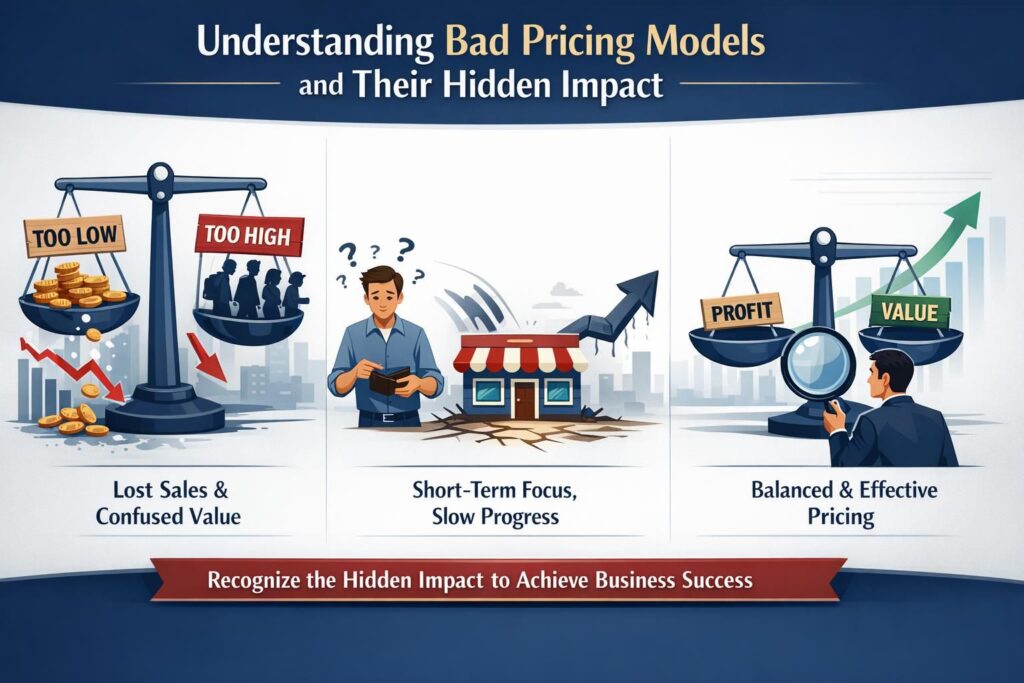
Understanding Bad Pricing Models and Their Hidden Impact
Bad pricing models can hurt a business without anyone noticing. Many owners believe their pricing is reasonable, but this can be misleading. If prices are set too low, a business might struggle to make money. On the flip side, pricing that is too high can scare away customers.
These pricing choices can confuse clients about the value of what they offer. When clients don’t see the value, they may be less willing to purchase. This perception can lead to lost sales, even when the service is excellent.
Additionally, bad pricing can slow a business’s growth. Owners often focus on short-term sales rather than long-term success. They may stick with familiar pricing methods that do not support their goals. This creates a cycle where growth feels slow or stops entirely.
Understanding how pricing works is key for business success. An effective pricing model balances profit with perceived value from the customer’s viewpoint. By recognizing the hidden impact of poor pricing, owners can see where changes need to be made. This awareness is the first step towards building a stronger business.
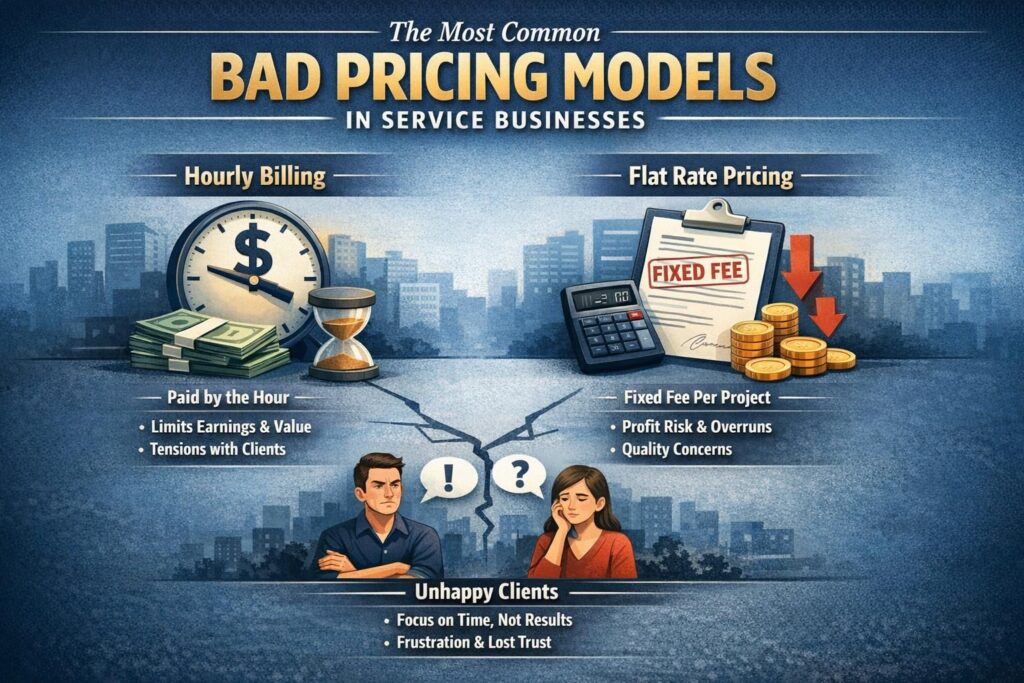
The Most Common Bad Pricing Models in Service Businesses
Many service businesses rely on bad pricing models. This can be harmful to growth and success. One major example is hourly billing. While it may seem fair, it often limits earnings. Clients may feel they are paying for the clock, not the value they receive. This can lead to tension in the client relationship.
Flat rates are another common practice. While they offer simplicity, they can create problems too. If the service takes longer than expected, the business loses money. This puts pressure on the service provider and can affect the quality of the work.
Both models can distort client expectations. When clients see hourly rates, they might focus on time rather than results. They might not understand the effort needed to achieve outcomes. This can lead to frustration and loss of trust.
Service businesses should think carefully about their pricing. If prices don’t reflect the value offered, growth can stall. It’s essential to find a balance between what clients are willing to pay and what the service is worth. This way, businesses can build better relationships with clients while also supporting their growth.

Why Bad Pricing Models Persist Despite Poor Results
Many business owners follow bad pricing models even when they know these models hurt their profits. This often happens because of habits and beliefs that have been built over time. When a pricing method feels familiar, it’s easy to stick with it, even if it brings in limited results.
Fear can play a big role too. Business owners worry that changing prices may make customers unhappy. So, they avoid adjustments, even if their pricing is outdated or ineffective.
Industry norms can trap businesses as well. If everyone else is charging certain rates, it feels safer to follow suit. Owners might think they must compete on price instead of quality, leading to a race to the bottom.
There are also internal factors at play. Many business owners lack the right data to assess how their pricing affects their growth. They may not realize that higher prices can actually attract better customers and increase profits.
These factors create a cycle where ineffective pricing continues to hold businesses back. Recognizing these habits and beliefs can help owners break free from outdated models and open the door to better strategies. Awareness of these patterns can lead to smarter choices that benefit the business in the long run.
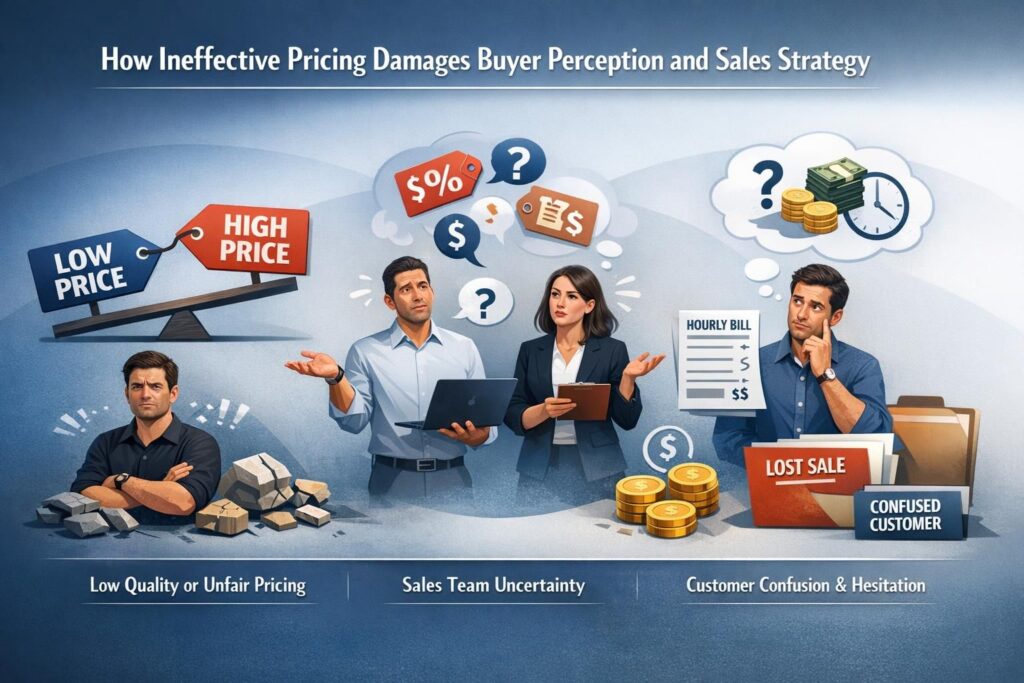
How Ineffective Pricing Damages Buyer Perception and Sales Strategy
Ineffective pricing can fundamentally shift how customers view a business. When prices are set too low, it can lead buyers to think the service lacks quality. On the other hand, prices that are too high may seem unfair, leaving potential customers feeling uncertain. This confusion can hurt trust and make them less likely to buy.
Bad pricing also affects how sales teams operate. If the pricing is unclear or feels inconsistent, it complicates selling. Salespeople might hesitate, unsure about discounting or explaining the value of a service. This can lead to missed opportunities and lost revenue.
Moreover, poor pricing models can create frustration. Customers may not understand what they are paying for, impacting their decision-making. For example, if a service is billed hourly, clients could worry about costs piling up. This worry can prevent them from committing to a purchase, fearing unexpected expenses.
Successful businesses have clear pricing that reflects value. When prices match a customer’s perception of quality, it builds confidence. Customers are more likely to feel satisfied, leading to repeat business and positive word-of-mouth. By recognizing how pricing affects perception and sales, business owners can make informed decisions that encourage growth.

The Hidden Role of Pricing in Business Growth and Scalability
Pricing impacts every part of a business. It sets the tone for how customers view products and services. When pricing is unclear or too low, it can confuse buyers and hurt sales. This confusion often leads to lost opportunities for growth.
Pricing models influence marketing efforts. For example, if a service is priced too low, it may attract unwanted customers who don’t value quality. This can lead to a cycle of chasing clients instead of building relationships. A strong pricing strategy should attract the right customers, who are willing to pay for value.
Additionally, pricing affects operational decisions. A bad pricing model can lead to overworked staff and strained resources. When businesses don’t charge enough, they struggle to invest in their operations. This can limit growth and scalability.
Moreover, pricing can determine a business’s market position. Companies that price effectively can create a strong brand image. This image can build trust and loyalty among customers. Customers often perceive higher prices as an indicator of quality. Therefore, a well-thought-out pricing model can significantly improve a business’s ability to grow and thrive.
Recognizing the role of pricing in growth helps business owners see patterns in their decision-making. Adjustments to pricing strategies can lead to better alignment with business goals and improved overall performance.

Defining Strategic Pricing for Sustainable, Structured Growth
Strategic pricing is all about choosing the right price for products or services. A solid pricing model helps ensure the business earns enough to grow while also delivering value to customers. It’s not just about making immediate sales; it’s about building a long-term relationship and a strong brand.
Every business owner should think about their pricing in relation to the market, costs, and customer needs. Pricing should reflect the value customers receive. When a business sets prices too low, it may lose money and create confusion about quality. Conversely, prices that are too high can scare potential customers away.
A good pricing strategy takes into account both costs and customer expectations. It means regularly reviewing prices and being willing to make changes when needed. This process also involves understanding competitive pricing and assessing what makes the business unique in the eyes of customers.
Establishing clear, strategic pricing helps build trust and loyalty. It ensures that customers feel they are getting a fair deal. When pricing aligns with business goals and customer needs, it supports sustainable growth. This alignment not only increases sales but also helps the business scale effectively over time. Each decision about pricing is a stepping stone toward long-term success.

Conclusion
Understanding the impact of bad pricing models is crucial for any business experiencing slow growth. Many owners face challenges when their pricing doesn’t clearly convey value. This confusion can make clients hesitant to purchase, leading to stagnation. To overcome this, it is vital to create simple systems that make pricing clearer and more aligned with customer expectations.
When businesses recognize the hidden costs of their pricing strategies, they can begin to shift towards better models. A strategic pricing approach balances profitability with perceived value. By doing so, it helps build stronger relationships with clients and supports both growth and scalability.
Moreover, clarity in pricing not only enhances customer trust but also improves the effectiveness of sales strategies. When clients understand what they are paying for, they are more likely to commit to purchases without hesitation. Ultimately, the right pricing can pave the way for sustainable growth and a thriving business.
In summary, bad pricing models can limit potential and create confusion. Business owners should aim for clarity and value in their pricing strategies. By doing so, they set a solid foundation for growth and ensure their business can adapt and thrive in an ever-changing market.