





Introduction
Many business owners experience a slowdown in their growth. They may feel busy, tackling daily tasks, but not making real progress. This common situation often leads to frustration and uncertainty. Owners might not know why their business feels stuck, and they may feel overwhelmed by competing priorities.
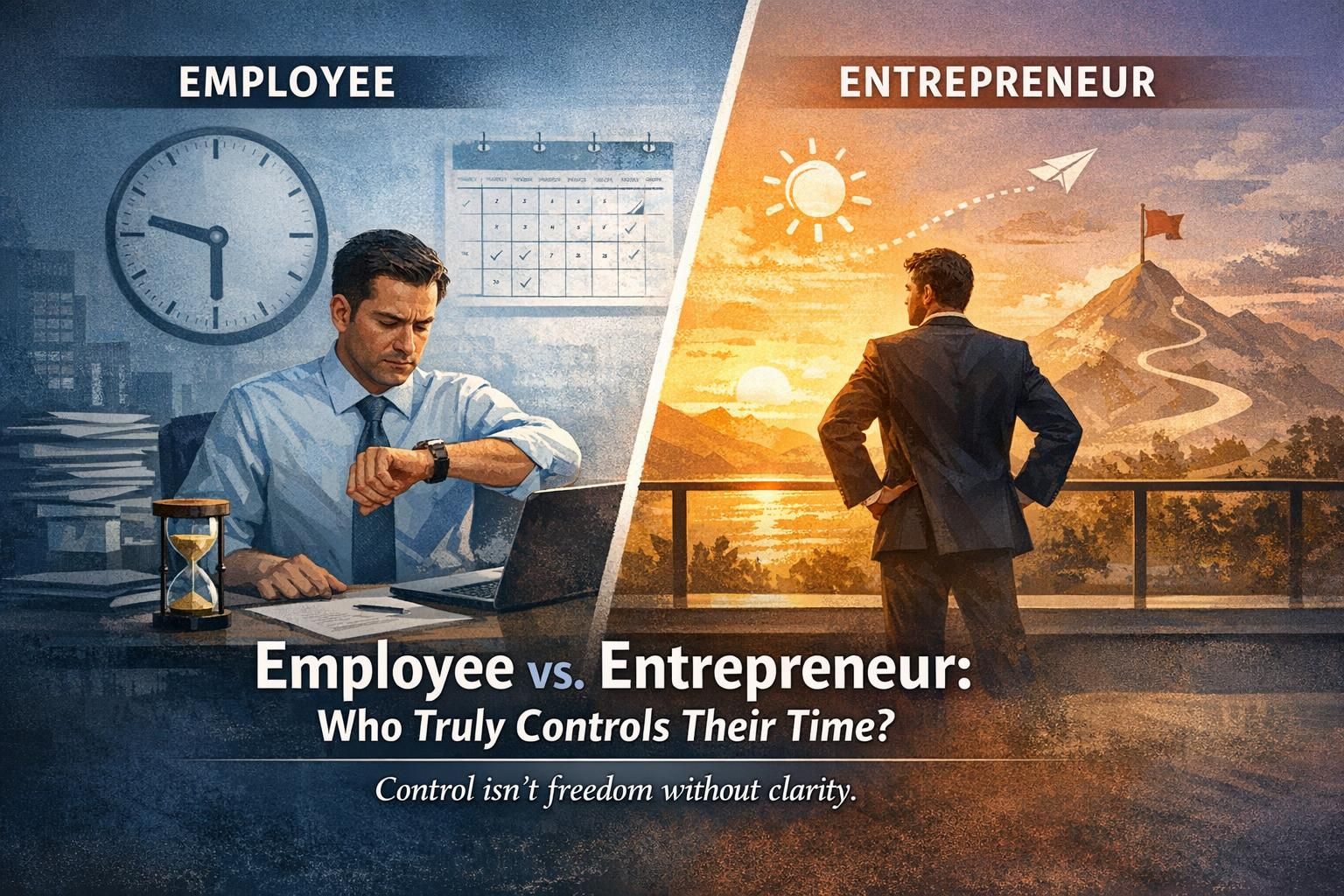
A key factor in this lack of forward movement is the difference in mindset between employees and entrepreneurs. Unlike employees, who often follow a structured routine set by others, entrepreneurs must take ownership of their time. This shift in perspective is crucial for determining how effectively they can drive their business forward. When focus is lost and tasks become reactive, it can lead to chaos and diminished productivity.
To regain control, business owners need clear direction and simple systems. Understanding their unique goals helps them prioritize tasks and allocate time wisely. This article will explore the differences between an employee and entrepreneur mindset regarding time ownership. It will show how adopting a clearer, more strategic approach can lead to intentional actions that fuel business growth. By recognizing the importance of mindset in managing time, business owners can move from feeling stuck to making meaningful progress.
Understanding the Employee vs Entrepreneur Mindset in Time Ownership
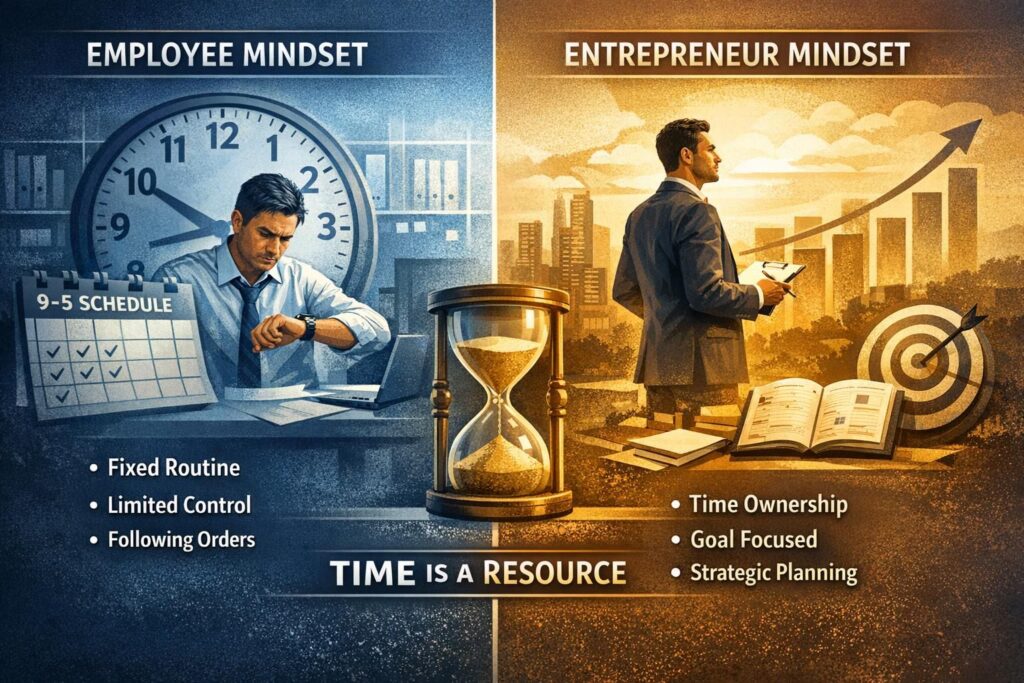
The way employees and entrepreneurs see time is very different. Employees often view time through the lens of their work schedule, which is set by others. They follow a set routine and may feel they have little control over how they spend their time. In contrast, entrepreneurs embrace time ownership. They believe their success hinges on how effectively they manage their time. This mindset allows them to prioritize tasks that drive growth.
For entrepreneurs, time is seen as a valuable resource. They make decisions based on long-term goals rather than short-term tasks. They often create strategies to maximize their time, including planning and delegating. This difference in mindset greatly affects how each group achieves their goals.
When business owners feel stuck or overwhelmed, it often stems from their mindset about time. They might struggle with prioritizing their workload or lack clarity in their goals. Recognizing this difference in mindset can lead to a more empowered approach to managing time. Entrepreneurs who understand their control over time can better navigate the challenges they face, paving the way for clearer thinking and more focused actions.
The Illusion of Freedom: Why Control Without Clarity Backfires
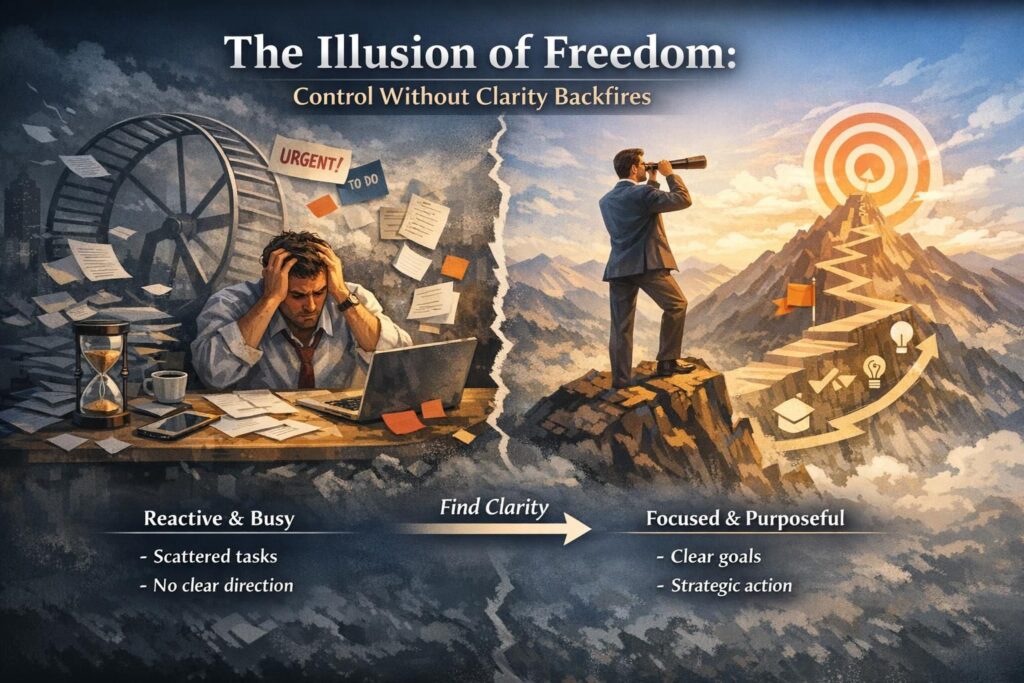
Many business owners believe that having control over their schedule means they are free. However, without clear goals, this control can lead to confusion and stress. When focus and purpose are missing, decisions become scattered and reactive. This means time may be spent on tasks that do not support real growth.
For example, a business owner might choose to work long hours on small tasks that feel urgent. Yet, these tasks often do not align with their larger goals. As a result, they may feel busy but not productive. The illusion of freedom feels heavy when there is no direction.
To change this, owners should ask themselves what really matters to their business. Taking time to define clear objectives can bring focus. When priorities align with goals, every action becomes more meaningful. This clarity transforms the way time is controlled and used. Instead of running in circles, business owners can take intentional steps towards growth.
Ultimately, understanding that control without clarity leads to burnout is crucial. A schedule filled with reactive tasks diminishes real autonomy. By focusing on specific outcomes, business owners can unlock true freedom and create a path toward growth. This shift in mindset is essential for turning busy days into purposeful ones.
Misaligned Priorities: How Reactive Thinking Sabotages Time Use
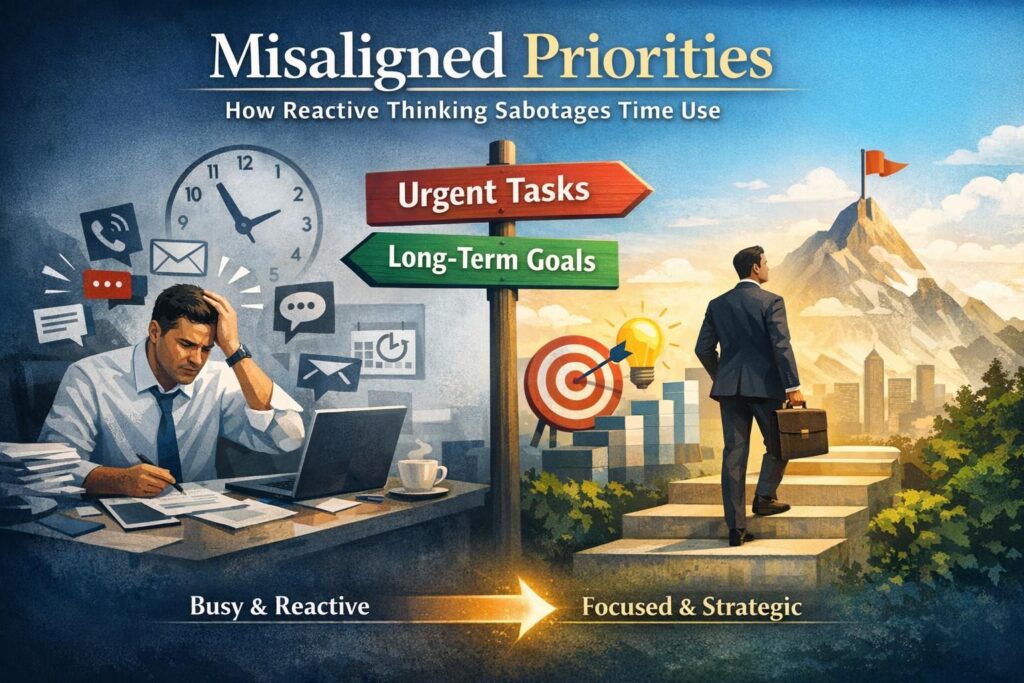
When business owners focus too much on daily tasks, they often lose sight of their main goals. This reactive thinking can harm their time management. Both employees and entrepreneurs can get caught up in the urgent tasks of the day instead of what's truly important for growth.
For example, answering emails and attending meetings might feel productive, but these activities can take time away from planning and strategy. Without clear priorities, it’s easy to waste hours on things that don’t drive the business forward. This can lead to stress and confusion about where the business is heading.
Making decisions based on immediate needs rather than long-term goals leads to a chaotic work environment. Business owners should take time to establish what their priorities are and align daily activities to these goals. By consciously deciding what to focus on, they can break free from being reactive and start using their time wisely.
Recognizing this pattern can help business owners shift their mindset. They can move from being busy to being purposeful. When time is managed deliberately, it becomes easier to see progress and growth. Taking control of priorities is a vital step toward achieving business success.
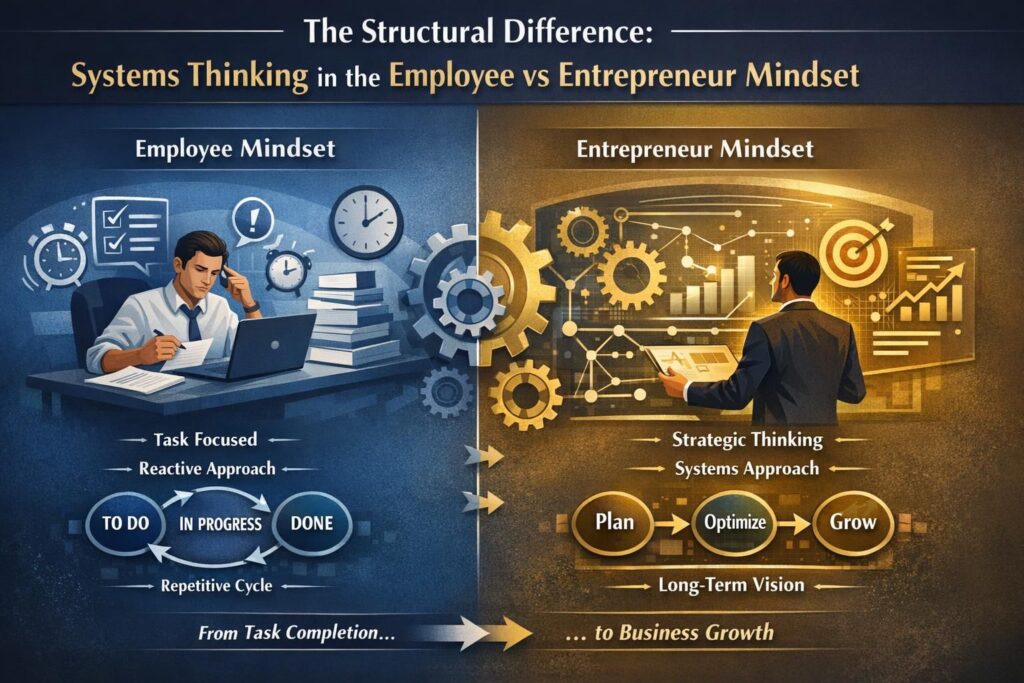
The Structural Difference: Systems Thinking in the Employee vs Entrepreneur Mindset
Entrepreneurs and employees approach their work differently. This difference stems from how each group thinks about their tasks and goals. Entrepreneurs often see their roles as part of a larger system. They think strategically about how to build and improve processes. This mindset helps them focus on what will grow their business over time.
In contrast, employees may focus on finishing tasks one by one. Their work is often reactive, responding to immediate needs rather than long-term goals. This mindset can lead to a rush of activity without meaningful progress. It creates a cycle where tasks are completed, but growth feels slow or stagnant.
To break this cycle, it helps to think about how systems affect business growth. Entrepreneurs who understand systems can identify patterns, streamline operations, and foresee challenges. This strategic thinking allows for adjustments that lead to better time management and resource allocation.
By recognizing these differences in mindset, business owners can start to shift their approach. They can adopt a more systematic view, which leads to intentional actions that support growth. Instead of just getting through the day, they can focus on building a framework that drives their business forward. Understanding this structural difference is key to moving beyond simple task completion and toward sustainable growth.

Scaling Requires Clarity: Moving From Busy to Purposeful
Businesses often feel stuck when owners confuse being busy with being productive. Many think that working longer hours is the key to growth. However, this mindset can lead to burnout and more confusion about priorities. To really grow a business, it’s important to shift focus from just getting things done to doing the right things intentionally.
This shift begins with defining clear goals. When business owners know exactly what they want to achieve, it becomes easier to prioritize tasks that support those goals. For example, rather than reacting to every email or task, owners should ask if that task moves them closer to their objectives.
Being purposeful means blocking out time for specific activities that help achieve growth. This can include planning, networking, or even self-education. Setting aside time for these activities can provide clarity and direction. It’s about using time wisely instead of just filling it with tasks.
Moreover, having a routine that aligns with business goals allows entrepreneurs to leverage their strengths. This means focusing on what they do best, delegating other tasks, and saying no to distractions. When this clarity of purpose is present, business owners can create a path that feels less overwhelming and more rewarding. This is how real scaling happens, turning busyness into effective growth.
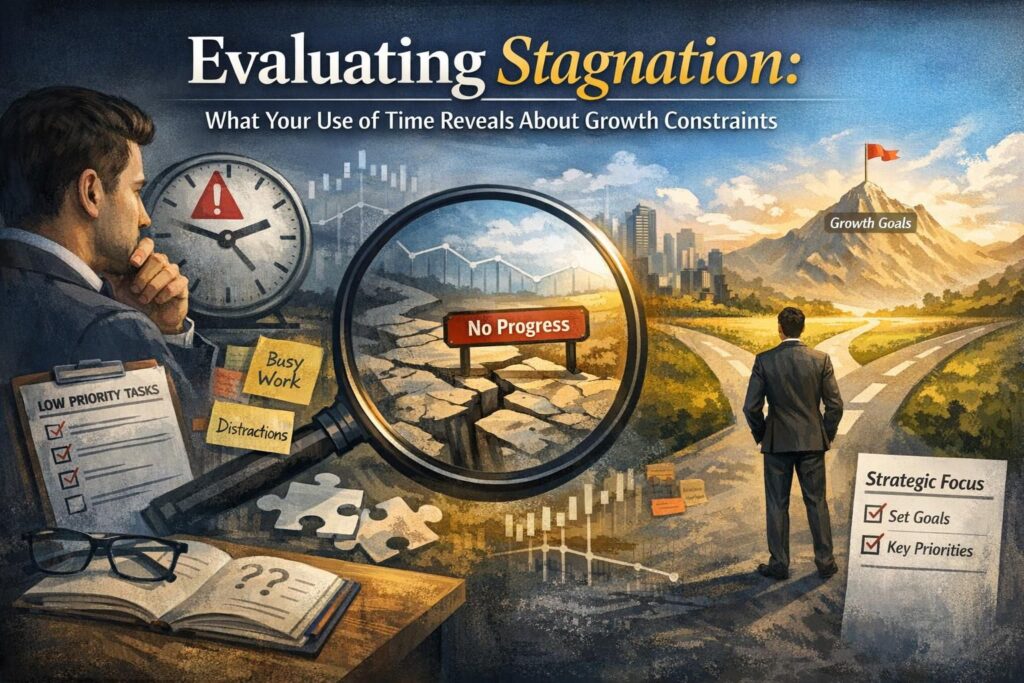
Evaluating Stagnation: What Your Use of Time Reveals About Growth Constraints
Business owners often feel stuck when they use their time poorly. Every decision and daily habit affects growth. If time is spent on tasks that don’t move the business forward, it can reveal underlying issues. Reflecting on how time is used can uncover patterns of stagnation.
For example, if time is wasted on low-priority tasks, it may signal a lack of focus. This can stem from unclear goals or misaligned priorities. When business owners spend hours on activities that don’t align with their growth strategy, it creates a barrier to progress.
Moreover, recognizing how time is allocated can highlight blind spots. If certain areas receive little attention, it might indicate a need for change. The time spent on tasks should reflect the business's goals and growth ambitions. When this alignment is missing, it becomes harder for the business to thrive.
Ultimately, evaluating how time is used can reveal deeper issues in the business model. Focusing on the right activities can help break through stagnation. It’s essential for business owners to step back and assess whether daily choices support their long-term vision. By doing this, they can identify growth constraints and work towards a clearer path forward.
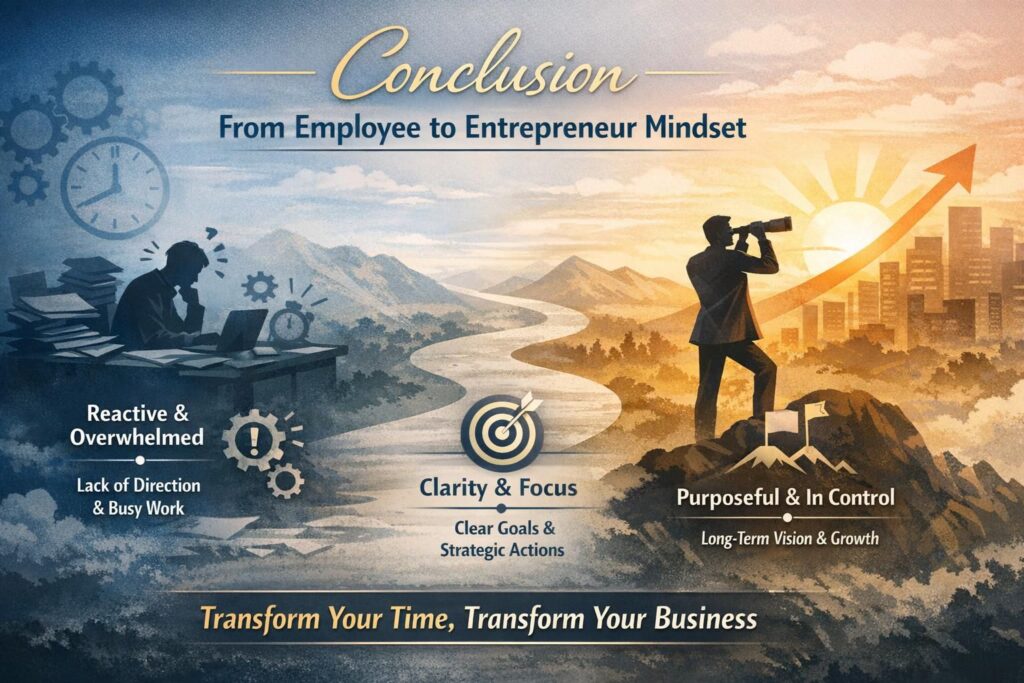
Conclusion
In summary, understanding the "employee vs entrepreneur mindset" is key to navigating business growth. Business owners often find themselves feeling overwhelmed when they lack clear direction. The difference in how employees and entrepreneurs view time plays a significant role. Entrepreneurs take ownership of their time, focusing on long-term goals, while employees may react to immediate tasks.
Without clarity, control can lead to stress and burnout. Owners must recognize when they are busy with tasks that do not contribute to their growth. Setting clear goals helps prioritize actions and moves them toward purposeful work. This shift in mindset is crucial. By simplifying their approach and embracing strategic thinking, business owners can manage their time better.
Creating simple systems allows for deliberate actions instead of getting caught in a cycle of reactive tasks. When business owners align their daily activities with larger objectives, they can experience true growth. This clarity and focus transform their time from a source of stress into a valuable resource for building success.
Ultimately, by adopting an entrepreneur mindset and committing to intentional action, they can break free from stagnation and guide their business toward a dynamic and productive future. Understanding these concepts enables owners to see that real growth is achievable when grounded in clear thinking and simple systems.